
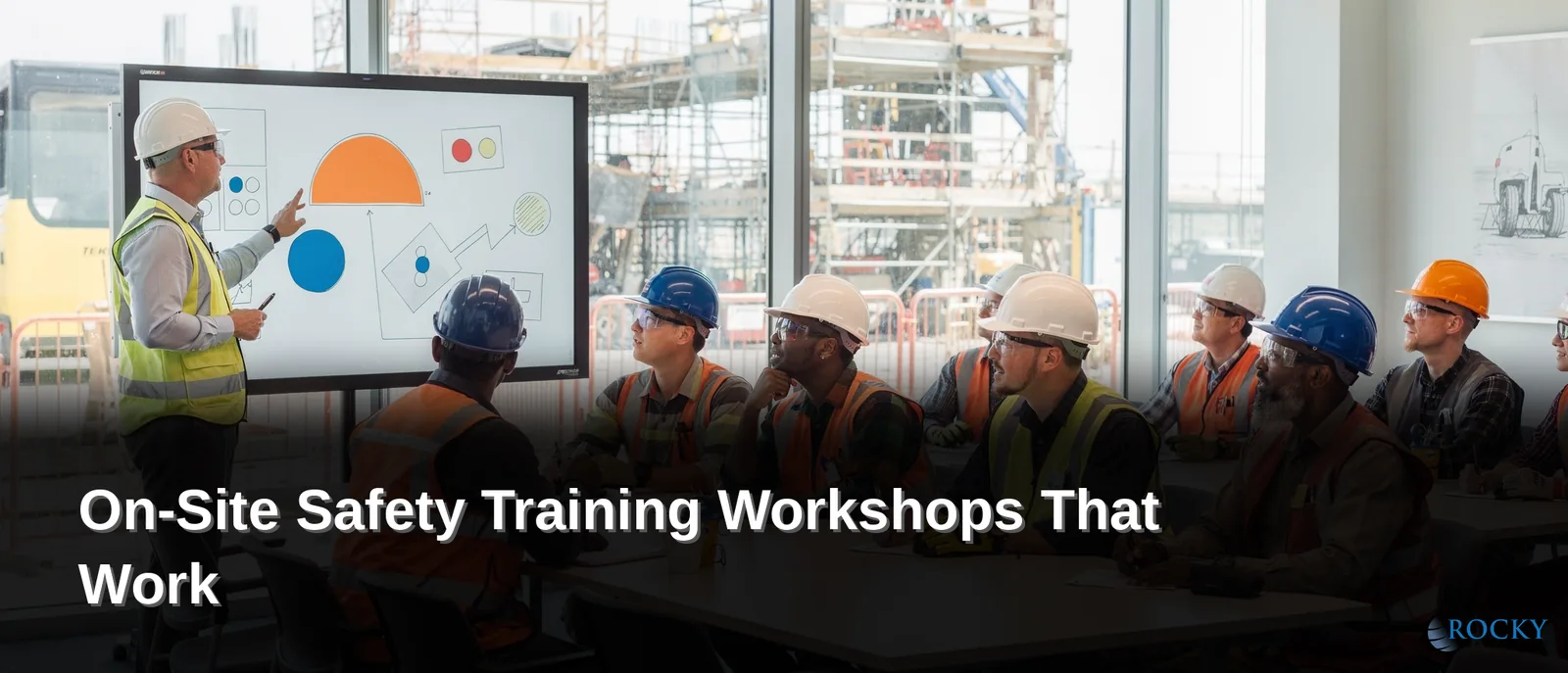
On-site safety training workshops from Rocky Zapata Safety Consulting deliver OSHA 10-hour and 30-hour outreach training, hazard communication instruction, and fall protection certification directly at construction, healthcare, and industrial facilities across South Florida, West Coast Florida, and Central Florida. We customize each workshop to address specific workplace hazards, strengthening compliance and reducing incident-related losses.

Key Takeaways

  • On-site workshops bring OSHA-required safety training directly to your Doral workforce, eliminating scheduling conflicts.
  • Comprehensive training covers hazard identification, compliance requirements, and practical safety protocols for your 17-person team.
  • Certified safety professionals conduct customized workshops addressing your specific industry risks and operational needs.
  • Post-training audits and safety program development ensure sustained workplace compliance and injury prevention.

Why Choose On-Site Safety Training Now?

Workplace hazards do not wait for a training calendar to catch up. Federal regulation requires employers to train workers who face hazards on the job, and delaying instruction leaves crews exposed and companies liable. On-site safety training closes that gap by bringing certified instruction directly to the facility, the job site, or the plant floor where hazards actually exist.

Waiting on compliance carries real consequences. Organizations that fall short of OSHA standards face inspection findings, halted operations, and reputational damage that outlasts any single citation. Selecting the right safety partner is not a minor administrative decision. It is a consequential choice that shapes whether a workforce goes home safe every day.

What Makes On-Site Training More Effective Than Off-Site Courses?

Training delivered on location lets workers practice on the exact equipment, layouts, and hazards they encounter daily. An onsite OSHA workshop grounds abstract regulatory language in the specific realities of a construction site, hospital wing, or manufacturing line. This context accelerates retention and reduces the disconnect that often follows generic classroom instruction.

Why Does Choosing the Right Safety Partner Matter So Much?
Regulatory requirements shift by industry, facility type, and jurisdiction, and aligning a safety strategy with organizational needs takes real expertise. Firms that understand this complexity design practical safety workshops rather than one-size-fits-all seminars. We build our approach around this reality, pairing every onsite safety instructor with a program tailored to the client's operations.

Operating from Doral, Florida, we work directly with regional employers to deliver a custom on-site safety training program rather than a generic package. That local presence supports consistent brand identification across every site visit, workshop, and compliance review we conduct. For safety directors and compliance officers managing multiple locations, that consistency reduces confusion and reinforces accountability across the organization.

What Does An Onsite OSHA Workshop Include?

An onsite osha workshop delivers hazard awareness instruction, certification pathways, and site-specific hazard recognition, all built around the equipment and conditions our clients face daily. We design each session as on-site safety training, meaning our teams arrive at the facility rather than requiring workers to travel offsite for instruction. This approach keeps crews productive while closing compliance gaps in real time.

Our Workplace Safety Training: Expert OSHA & Compliance Programs for Your Team cover 10-hour and 30-hour outreach training for construction and general industry, alongside hazard communication training and fall protection certification. These outreach courses function as basic hazard awareness classes, delivered exclusively by OSHA-authorized trainers who understand the regulatory nuances behind each standard.

How Do The 10-Hour And 30-Hour Courses Differ?

The 10-hour course suits entry-level workers who need foundational hazard awareness before stepping onto a job site. The 30-hour course goes further, covering a broader range of safety topics and deeper hazard recognition for supervisors and experienced personnel. Choosing between them depends on a worker's role and level of site exposure.

Which Industries Do These Programs Cover?

Workshop curricula extend across construction, general industry, food and beverage manufacturing, and disaster site safety. This breadth allows us to tailor practical safety workshops to sector-specific risks rather than applying a one-size-fits-all curriculum.

Every session pairs classroom instruction with hands-on demonstration, led by a qualified onsite safety instructor who adapts content to the equipment and hazards present at each facility. For organizations managing multiple sites or specialized hazards, we build a custom on-site safety training program around existing safety protocols and compliance history. Consistent brand identification across every training deliverable reinforces accountability. Gives safety directors a reliable, unified point of reference for audits and regulatory review.

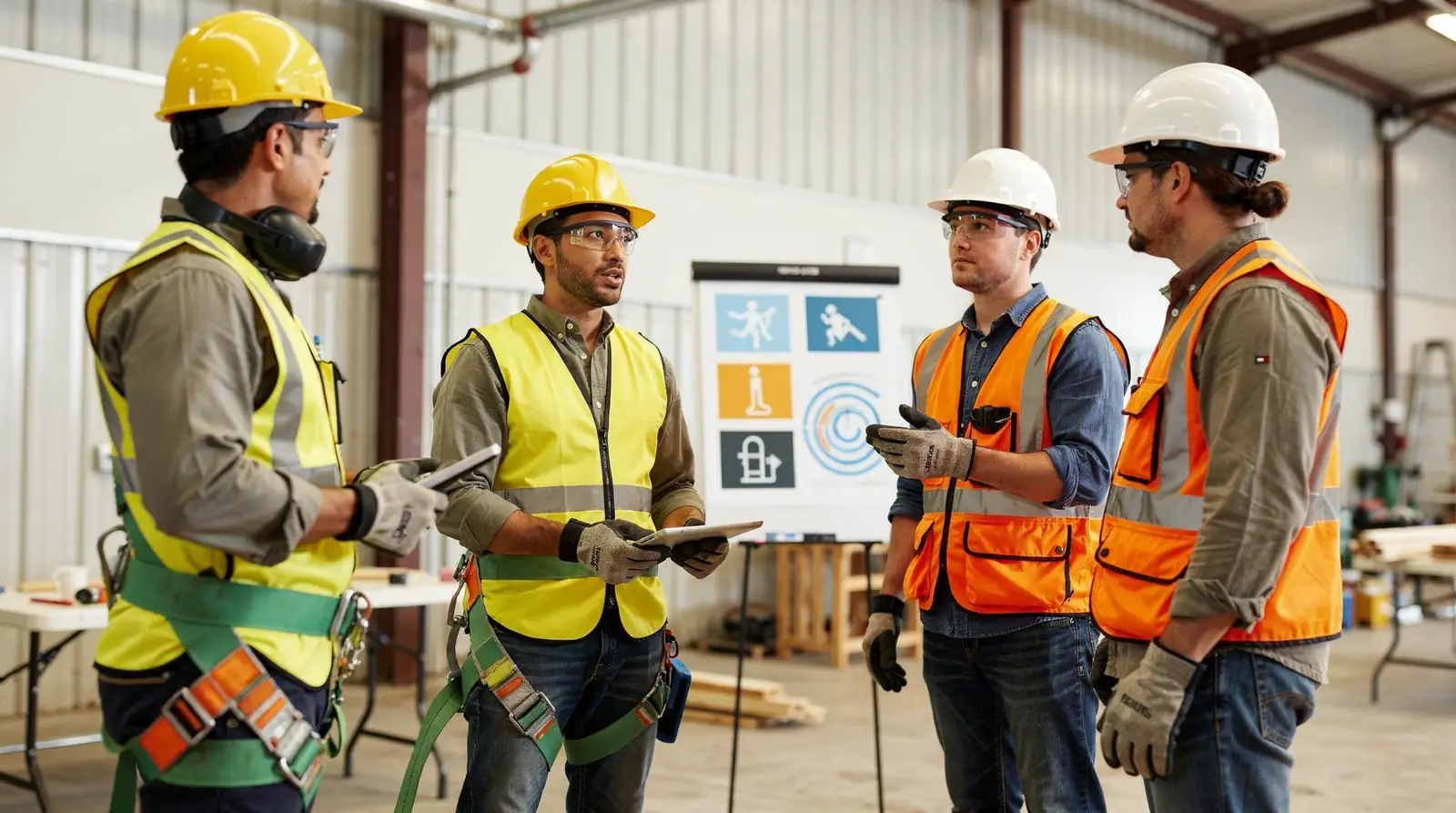
Construction safety consultants and workplace safety training session in a Florida factory setting.

How Do Practical Safety Workshops Reduce Incidents?

Practical safety workshops cut incident rates by pairing instruction with real work-site conditions instead of classroom theory alone. Hands-on repetition builds muscle memory for hazard recognition, so crews respond correctly under pressure rather than hesitating. We build our practical safety workshops around this principle: knowledge only reduces risk when workers can apply it on the equipment and terrain they use every day.

Our approach starts with expert job site audits. These audits are comprehensive evaluations designed to assess compliance with safety standards and identify hazards before they cause harm. We treat every audit as a diagnostic tool, not a checklist exercise.

The findings matter because they drive what happens next. Audits are crucial for minimizing workplace accidents. Confirming that safety protocols are actually followed in daily operations, not just documented on paper. Without this verification step, even well-written safety programs drift out of alignment with actual site behavior.

Why does hands-on instruction work better than classroom-only training?

Workers retain safety procedures better when they practice them physically rather than simply hearing them described. A hands-on training approach helps ensure teams are prepared to work safely immediately after completing instruction, closing the gap between certification and competent performance. This is the reasoning behind every onsite osha workshop we deliver.

What role does proactive inspection play in preventing future incidents?

Proactive inspection measures address current safety issues while cultivating a lasting culture of safety among workers. Rather than reacting after an injury occurs, we identify hazards early and correct them before they escalate.

Our workshop model typically combines:

  • On-site hazard walkthroughs led by an onsite safety instructor
  • Equipment-specific drills tied to actual job tasks
  • Follow-up audits to confirm protocol adherence
  • A custom on-site safety training program built around findings from the initial assessment
This structure ensures on-site safety training produces measurable, lasting behavior change rather than temporary compliance.

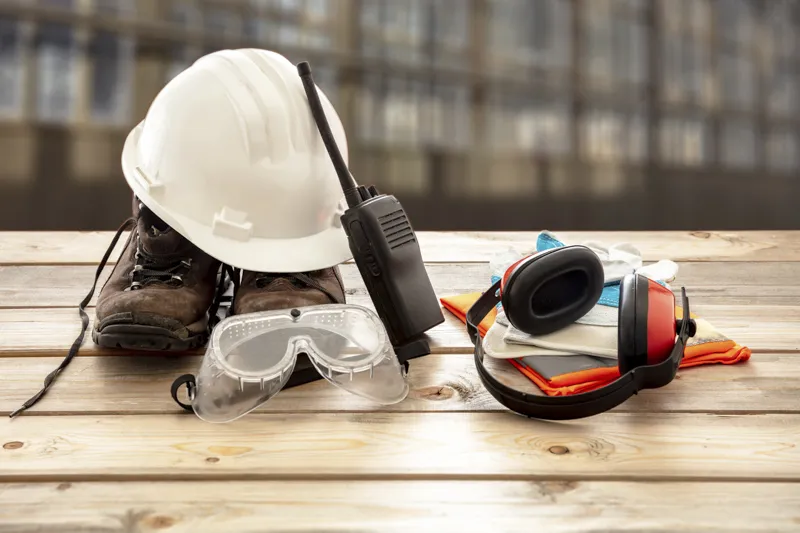
Safety consulting equipment: hard hat, safety glasses, ear protection, and two-way radio.

Who Should Lead Your Onsite Safety Instructor Sessions?

Qualified, credentialed professionals should lead every session, never generalists borrowing safety duties on top of unrelated roles. Compliance training stands as an essential piece of any effective workplace safety strategy. That foundation only holds when the person delivering it has real authority on the subject. An onsite safety instructor brings more than a slideshow. They bring judgment earned through fieldwork, incident review, and regulatory fluency.

Our approach to on-site safety training rests on this principle: instructors must know the equipment, the regulations, and the specific hazards of the facility they're standing in. We maintain a team of qualified instructors to support programs across construction, healthcare, and industrial sites, ensuring clients get a consistent, knowledgeable presence.

What qualifications should an onsite instructor hold?

Instructors leading an onsite osha workshop should carry authorization to teach OSHA Outreach Training courses, which deliver critical safety education to workers across construction, healthcare, and industrial sectors. Beyond outreach cards, strong programs draw on trainer courses, standards and technical courses, and dedicated safety certificate tracks. These credentials signal that an instructor understands both the regulatory text and its real-world application on the floor.

Should instructors be internal staff or outside consultants?

Many facilities benefit from a blend of both. Internal staff know the equipment and culture; outside consultants bring broader exposure to industry standards and practical safety workshops refined across multiple sectors. A custom on-site safety training program built around this partnership typically outperforms either approach alone, since it pairs site-specific knowledge with independent regulatory expertise.

Consistent brand identification matters here too. Clients should always know exactly who is training their workforce and under what credentials, session after session.

How Do You Build A Custom Training Program?

A custom on-site safety training program starts with a comprehensive assessment of the workplace itself. We walk the floor, review operations, and identify the specific hazards, regulatory requirements, and operational demands unique to each site before writing a single lesson plan.

That assessment shapes everything that follows. Rather than pulling a generic curriculum off the shelf, we build training content around the actual conditions our clients face day to day. A construction crew handling fall hazards needs a different curriculum than a healthcare facility managing bloodborne pathogens. Our practical safety workshops reflect that distinction.

Customization means the curriculum traces directly back to the hazards found during assessment. We don't recycle a standard slide deck across every client. Instead, each onsite osha workshop reflects the equipment, processes, and risk profile of the specific facility being trained.

Location matters too. Florida's construction, healthcare, and industrial sectors face different regulatory pressures depending on region, and our approach adjusts accordingly:

  • South Florida operations often contend with dense urban construction sites and healthcare compliance demands.
  • West Coast Florida businesses face distinct operational and environmental conditions.
  • Central Florida facilities require tailored strategies suited to their industrial mix.

We deliver this training directly at client locations across all three regions, putting an onsite safety instructor in the room with the team and the equipment they use daily.

Why does on-site delivery matter for program design?

On-site safety training lets us observe real workflows instead of relying on secondhand descriptions. Instructors adapt instruction on the spot when conditions warrant it. That responsiveness keeps compliance efforts grounded in the operational reality of the facility, not a generic template borrowed from another industry.

What Makes Bilingual And Industry-Specific Training Matter?

Clear communication saves lives on job sites, and language barriers create the exact gaps where accidents happen. Miami's multicultural workforce demands safety instruction that reaches every worker, not just those fluent in English. We built our on-site safety training around this reality, delivering practical safety workshops that speak directly to the people performing the work.

We offer training programs in both English and Spanish. This dual-language approach guarantees that every employee, regardless of language proficiency, receives the same critical safety information at the same level of detail. Nothing gets diluted in translation, and no worker is left guessing about a hazard that could injure them.

Industry differences matter just as much as language. A hospital floor and a construction site face entirely different risks. We design compliance training options that reflect those diverse needs across sectors.

Why does bilingual training reduce workplace incidents?

Workers who fully understand hazard instructions act faster and more accurately during high-risk tasks. When instructions arrive in a worker's primary language, comprehension improves and hesitation drops. That clarity translates directly into fewer misunderstandings on the floor.

What does industry-specific training look like in practice?

Our onsite osha workshop sessions adapt content to the actual equipment and conditions a crew encounters daily. A construction crew and a healthcare team need different emphasis, different scenarios, and different terminology.

Every onsite safety instructor we deploy draws on the same federal framework used in OSHA's Outreach Training Train-the-Trainer Program, the primary method for teaching workers occupational safety and health basics. Building a custom on-site safety training program around bilingual delivery and sector-specific content is not an add-on for us. It is the foundation of how we approach every engagement, reflecting Consistent brand identification across every training session we lead.

How Does Onsite Support Differ From Online Training?

Onsite support places instruction inside the facility, while online training keeps workers behind a screen. Our on-site safety training brings a live instructor. Hands-on materials directly to the job site, matching the equipment and hazards employees face every shift. Online modules deliver static content once and move on. Onsite programs adapt in real time to the floor, the machinery, and the crew's actual risk profile.

Providers who succeed at scale treat training as more than a course catalog. Real business support matters here: dedicated account managers and in-house safety experts guide organizations from onboarding through ongoing compliance, not just through a single session. That continuity separates a transactional online course from a genuine safety partnership, and it shapes how we structure engagements. We maintain Consistent brand identification. across every onsite visit, so facility teams recognize the same instructors, materials, and standards at each location we serve.

What makes onsite training more practical than remote options?

Practical safety workshops succeed because they happen where the work happens. Delivering an onsite osha workshop at the facility removes the burden of coordinating outside schedules or off-site travel. Crews train on their own equipment, under real working conditions, with an onsite safety instructor watching technique and correcting habits on the spot.

Why does field experience matter for onsite providers?

Field-tested experience shapes how a program gets delivered. Providers meeting customer needs safely and practically since as early as 2011 have refined their methods across countless sites and industries. That track record informs a custom on-site safety training program built around genuine hazards, not generic slideshows.

FactorOnsite TrainingOnline Training
LocationAt the facility, on real equipmentRemote, screen-based
SupportAccount managers, ongoing compliance guidanceCourse access only
SchedulingProvider comes to the clientSessions fit around a fixed platform

Facility managers gain hands-on correction. Compliance officers gain documentation built around their own site conditions.

What Should You Ask Before Hiring A Partner?

Four questions determine whether a safety consulting partner strengthens our operation or simply adds paperwork: what services does the firm actually deliver, what qualifications back their guidance, how do they measure results, and what happens after the contract is signed? Understanding the components and services a safety consultant offers affects operational integrity far beyond the training room. A weak partnership shows up later, in overlooked hazards, failed audits, or lapsed certifications nobody caught in time.

We built our own approach around three core evaluation areas: essential services offered, consultant qualifications, and the specific questions clients raise during selection. These considerations aid decision-making because they separate firms offering generic checklists from those providing tailored, defensible programs. A thorough evaluation should also examine workplace safety audit practices, the consultant's role in OSHA compliance, and the measurable benefits to day-to-day safety management.

What services should a safety consulting firm provide?

A credible partner delivers on-site safety training, workplace audits, program development, and ongoing compliance consultation, not a single one-off session. Look for firms that customize a custom on-site safety training program around your facility's actual hazards rather than a generic slide deck. An onsite safety instructor who understands your equipment and workflow catches gaps that remote training misses.

How do we know training meets OSHA requirements?

OSHA standards require employers to provide appropriate safety training to workers before they engage in hazardous activities. A partner running an onsite osha workshop should map every module to those requirements directly. We recommend requesting documentation showing how practical safety workshops align with current OSHA standards before signing any agreement.

FAQ

What training does Rocky Zapata Safety Consulting deliver on-site?

Rocky Zapata Safety Consulting delivers OSHA 10-hour and 30-hour outreach training, hazard communication instruction, and fall protection certification directly at construction, healthcare, and industrial facilities.

Where does Rocky Zapata Safety Consulting provide these workshops?

Operating from Doral, Florida, the company delivers on-site workshops across South Florida, West Coast Florida, and Central Florida, tailoring each session to the client's specific operations.

Why is on-site training more effective than off-site courses?

Training delivered on location lets workers practice on the exact equipment, layouts, and hazards they encounter daily, which accelerates retention and reduces disconnect from generic classroom instruction.

Conclusion

In closing, on-site safety training workshops represent a strategic investment in your organization's operational excellence and workforce protection. By implementing comprehensive, tailored training programs within your facility, you establish a culture of compliance and accountability that directly strengthens your bottom line. Rocky Zapata Safety Consulting remains committed to delivering the expert guidance. Practical instruction your team requires to navigate complex safety requirements with confidence and achieve sustained organizational success.