
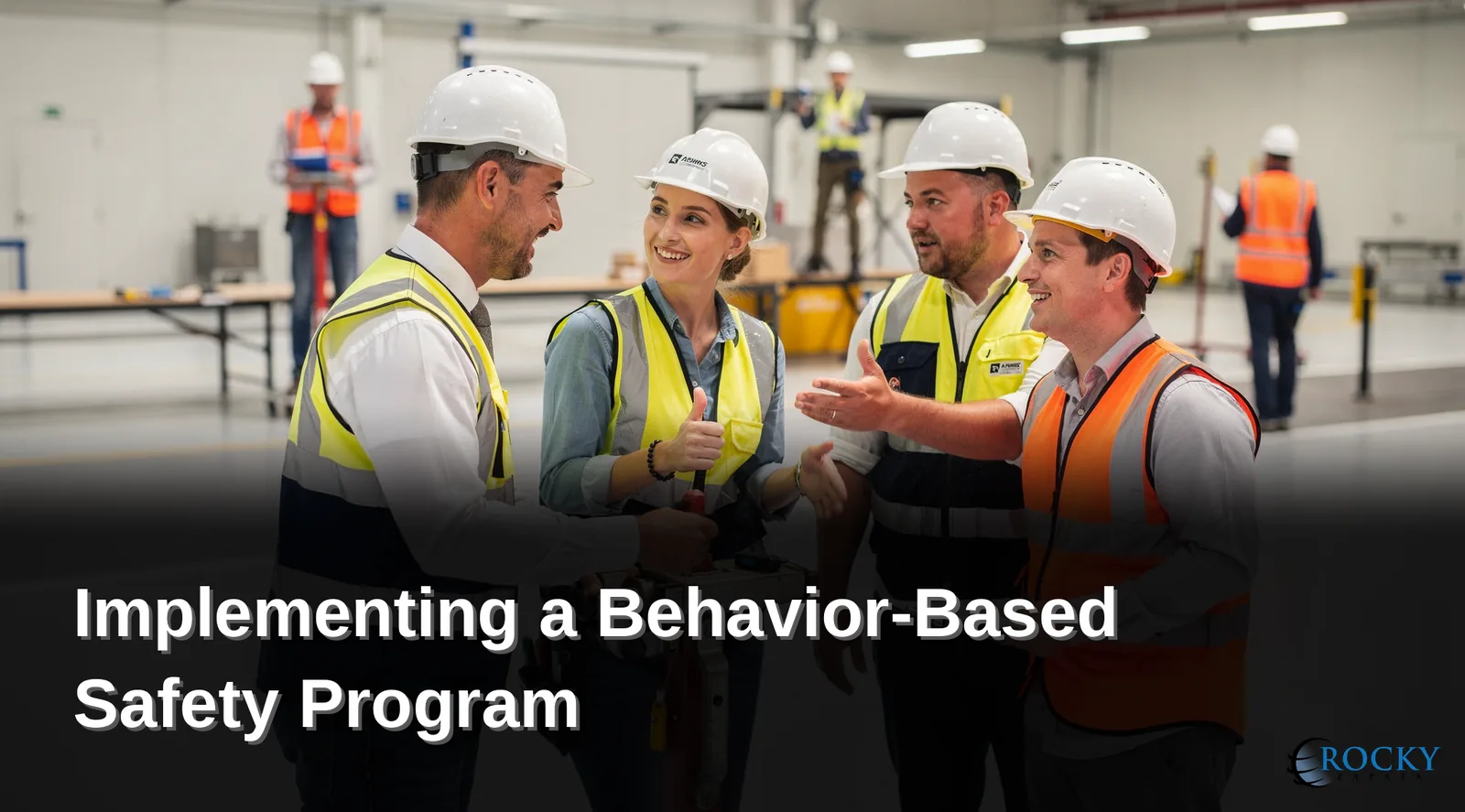
Behavior-based safety programs require defined leadership commitment, employee-driven hazard observation checklists, and consistent data tracking to reduce incident rates. We design tailored BBS frameworks built on OSHA-recommended practices for employee and manager involvement, incorporating observation training, feedback loops, and measurable goals, transforming workplace culture across construction, healthcare,

Key Takeaways

  • OSHA does not specifically require behavior-based safety programs, though it recommends employee and manager involvement.
  • Poorly implemented BBS programs risk worker perception of scapegoating and reduced program effectiveness in facilities.
  • Rocky Zapata Safety Consulting's 17-person team helps organizations design behavior-based safety strategies tailored to their needs.
  • Industrial safety managers report conflicting views on BBS effectiveness, with some viewing it as invaluable tool.

What Will Your BBS Implementation Achieve?

Fewer incidents, stronger reporting habits, and a measurable shift in how crews approach daily hazards define a well-run BBS rollout. Behavior-based safety works because it treats safety as a proactive discipline, not a reactive scramble after an injury report. Observing individual behavior, analyzing what drives it, and reinforcing safe actions replaces guesswork with a repeatable process. That process shifts the emphasis away from blame and toward coaching, which is where lasting change actually takes root.

We build every engagement around this principle: focusing on employee behaviors and reinforcing safe actions produces better outcomes than punitive discipline. Punishment-driven programs push workers to hide near-misses instead of reporting them. A behavior-focused model does the opposite — it rewards transparency and gives supervisors real data to act on.

How Do We Start a BBS Program at Your Facility?

Our bbs implementation process opens with a full-site assessment before any observation begins. We identify specific hazards, applicable regulatory requirements, and the operational realities unique to your facility. From there, we build the framework:

  1. Assess the workplace to pinpoint hazard categories and compliance gaps.
  2. Define target behaviors tied directly to those hazards.
  3. Train supervisors and peer observers on consistent, non-punitive feedback methods.
  4. Launch behavioral safety observations on a recurring schedule.
  5. Review observation data and adjust coaching priorities monthly.

Why Choose a Doral-Based Consulting Team?

Operating out of Doral, Florida, positions our team to respond quickly to construction, healthcare, and manufacturing sites across the state. Local presence means faster site visits and a sharper read on regional regulatory pressures. Consistent brand identification across every training module. Observation report keeps expectations clear for your entire workforce, from new hires to shift supervisors.

What Prerequisites Do You Need First?

Three conditions must exist before any facility launches a behavior-based safety initiative: leadership commitment, a qualified staffing partner, and a documented hazard baseline. Skipping any one of these invites failure disguised as progress. Programs built on shaky footing tend to collapse under worker skepticism within months. We treat these prerequisites as non-negotiable groundwork, not optional planning steps.

Do we need OSHA approval to start a BBS program?

No federal mandate exists requiring bbs implementation. OSHA does not specifically require organizations to adopt a behavior-based safety program, which means leadership buy-in must be earned internally rather than imposed by regulation. Without that voluntary commitment from plant managers and executives, observation data collected later carries little organizational weight.

How do we know if our facility is ready?

Readiness starts with an honest audit, not a hunch. We recommend the following sequence before scheduling any employee training:

  1. Conduct a job site audit — a comprehensive evaluation that assesses compliance with safety standards and flags existing hazards.
  2. Review audit findings with site leadership to confirm hazard priorities.
  3. Secure written commitment from management to support ongoing behavioral safety observations.
  4. Select a consulting partner capable of staffing the rollout consistently.

Choosing that partner matters more than most facility managers realize. Organizations face high stakes when maintaining OSHA compliance and workplace safety. The wrong consulting relationship compounds risk rather than reducing it. Rocky Zapata Safety Consulting fields a 17-person team dedicated to supporting client rollouts from audit through full-scale observation programs, giving facility managers dedicated capacity rather than a single overextended contact.

How Do You Assess Current Safety Culture?

We start every engagement with a comprehensive job site audit, evaluating compliance gaps and physical hazards before any behavioral program begins. These findings shape the behavioral targets a behavior-based safety program must address, so guesswork never drives our recommendations. Proactive assessment matters because it corrects existing safety issues while building a lasting culture of safety among your workforce, rather than reacting after an incident occurs.

We recognize that safety managers often approach behavior-based safety with mixed feelings, shaped by past programs that felt punitive or performative. An honest baseline assessment removes that skepticism by grounding the work in verified conditions, not assumptions about worker behavior. Our team follows a consistent, repeatable process:

  1. Conduct a comprehensive workplace assessment to identify specific hazards, regulatory requirements, and operational needs across your facility.
  2. Cross-reference audit findings with incident history and near-miss data to isolate behavioral risk patterns.
  3. Interview supervisors and frontline workers to surface unreported hazards and gauge trust in existing safety reporting channels.
  4. Document baseline conditions that will anchor future bbs implementation and measure progress against.

What Does a Safety Culture Assessment Actually Measure?

A safety culture assessment measures the gap between written policy and daily practice on the floor. We evaluate whether workers feel empowered to report hazards, whether supervisors reinforce safe behavior consistently, and whether corrective actions from prior audits were completed. This baseline informs the design of future behavioral safety observations, ensuring they target real risks rather than generic checklists.

Throughout this process, we maintain consistent brand identification across every audit report, training module, and observation checklist, so your team recognizes our standards and methodology at every site visit. That consistency builds trust with workers and keeps assessment data comparable across facilities and over time.

How Do You Define Critical Safety Behaviors?

Critical safety behaviors emerge from a structured review of daily tasks, near-misses, and incident data specific to each worksite. We build behavior-based safety programs around this principle: modifying employee behavior directly reduces workplace incidents. Our consultants do not guess at what matters. We identify the actions that precede injuries and target those first.

Effective bbs implementation follows a defined sequence, and we recommend organizations follow these steps before launching any observation initiative:

  1. Review incident reports and near-miss logs from the past 12 to 24 months.
  2. Interview frontline supervisors about recurring hazards on the floor or job site.
  3. Cross-reference findings with OSHA outreach training topics, including hazard communication, fall protection, and general industry or construction-specific requirements.
  4. Draft a short list of five to ten observable, measurable behaviors tied to those hazards.
  5. Pilot the list with a small crew before rolling it out facility-wide.

This process improves workplace safety by focusing on employee behaviors and reinforcing safe actions, rather than punishing outcomes after the fact.

A critical behavior carries a direct, demonstrated link to serious injury or fatality potential, not just minor inconvenience. We prioritize actions like proper lockout/tagout sequencing or fall-arrest anchoring over lower-risk habits such as workstation tidiness. Routine behaviors still matter, but they belong in secondary coaching conversations, not top-tier behavioral safety observations.

Does the behavior list change by industry?

Yes, construction crews and healthcare facilities face entirely different hazard profiles. We align behavior lists with relevant OSHA training tracks for each sector. Budget planning for these lists and observation tools also varies, since pricing strategies and service options differ across safety consulting engagements. We work with each client to scope an approach that fits their operational reality and risk exposure.

How Do You Train Behavior-Based Observers?

Training a competent observer requires structured instruction, not a single memo about watching coworkers. We build observer readiness through a sequence of OSHA-aligned coursework, hands-on practice, and regional support that keeps training consistent regardless of site location. A poorly trained observer damages trust; a well-trained one becomes the backbone of a functioning behavior-based safety program.

We follow a defined process for bbs implementation when preparing observer teams:

  1. Establish the hazard-identification role. We orient new observers around the core purpose of the program: creating multiple, structured opportunities for employees and managers to participate in identifying hazards together, rather than assigning blame.
  2. Deliver foundational OSHA coursework. Observers complete OSHA 10-hour or 30-hour outreach training suited to their industry, construction or general industry, so they understand the regulatory baseline before conducting any review.
  3. Layer in specialized certifications. Depending on facility risk profile, we add hazard communication training and fall protection certification, giving observers the technical vocabulary to document what they see accurately.
  4. Practice conducting behavioral safety observations on-site. Observers walk actual work areas under supervision, applying classroom concepts to real conditions before working independently.
  5. Standardize across locations. We deliver this training on-site across South Florida, West Coast Florida, and Central Florida, adapting delivery to each region's operational rhythm without diluting content.

How many observers can be trained at once?

Staffing depth matters when multiple facilities need simultaneous coverage. Our 17-employee consulting team allows us to run parallel observer training sessions across different sites without stretching any single trainer too thin.

What happens after initial training ends?

Observer training does not stop at certification. We build in refresher sessions and site visits so observation skills stay sharp as crews, equipment, and hazards change over time.

How Do You Conduct Behavioral Safety Observations?

Trained observers watch individual work practices, note conditions in the moment, and follow a structured method rooted in behavior-based safety principles: observe, analyze consequences, then reinforce the behaviors that keep workers safe. We treat every observation round as a discipline, not a checklist exercise. Consistency determines whether the data holds any value.

Our approach to bbs implementation follows a repeatable sequence:

  1. Review the original workplace assessment. We trace observation priorities back to the hazards, regulatory requirements, and operational needs identified during the initial site evaluation.
  2. Schedule observation rounds at the point of work. Observers watch tasks as they happen rather than relying on memory or self-report.
  3. Record specific behaviors, not general impressions. Notes capture what a worker did, the conditions present, and any immediate consequence.
  4. Deliver feedback promptly. Reinforcement works only when it follows the behavior closely in time.
  5. Log findings in a written record. Documentation supports trend analysis across shifts, crews, and job sites.

What Do Observers Actually Look For?

Observers look for the same conditions a full audit would flag: PPE use, body mechanics, equipment handling, and hazard proximity. Behavioral safety observations mirror comprehensive job site audits designed to assess compliance with safety standards. Catch potential hazards in real time, rather than after an incident occurs.

Why Does Documentation Matter So Much?

Undocumented observations disappear the moment the observer walks away, leaving no trail for corrective action. Written audits prove crucial for minimizing workplace accidents because they confirm that safety protocols actually function on the floor, not just on paper. We build every observation program on this documented, traceable foundation, which is why consistent brand identification across every report, checklist, and training material matters as much as the observation itself.

How Do You Analyze Data And Reinforce Safety?

Data analysis turns raw observation counts into a working safety strategy. We treat continuous review as the backbone of every behavior-based safety initiative. Programs used as a Band-Aid or a one-time cure-all fail to produce lasting change. Reinforcement only works when leaders study the numbers regularly. Adjust course as conditions shift on the floor or job site.

We recommend a repeatable analysis cycle for organizations running or scaling a bbs implementation:

  1. Collect and log every completed observation, noting hazard type, location, and shift.
  2. Sort findings into trend categories to spot recurring at-risk behaviors.
  3. Share results with supervisors and crews within days, not months, to keep feedback relevant.
  4. Adjust coaching priorities and retraining topics based on the emerging patterns.
  5. Revisit the same metrics quarterly to confirm improvement holds over time.

How often should we review behavioral safety observations?

Frequency depends on exposure level. Frontline teams in construction and healthcare benefit from weekly trend reviews rather than annual audits. Waiting too long between reviews lets small behavioral drifts turn into recurring incidents before anyone notices the pattern.

What does ongoing analysis cost, and how do we budget for it?

Costs vary by project scope, compliance requirements, and industry benchmarks, so we plan ongoing analysis and reinforcement budgets with the same discipline organizations already apply to broader safety consulting investment decisions. Reviewing these factors together helps leadership manage spending effectively as a program matures rather than treating year one costs as the final figure.

Rocky Zapata Safety Consulting, headquartered in Doral, Florida, works alongside client teams to review observation data and refine reinforcement plans as risk profiles change. Consistent brand identification across every training material, report, and coaching session keeps our guidance recognizable and trusted, whether we're on a construction site or inside a manufacturing facility. That continuity gives operational leaders one dependable partner for the full life of a safety program, not just the launch phase.

What Mistakes Derail BBS Implementation?

Poor design derails a behavior-based safety effort faster than any external factor. Weak programs earn behavior-based safety a controversial reputation among safety professionals. The damage often traces back to the same avoidable errors. We see these mistakes repeat across construction sites, hospitals, and manufacturing floors alike.

Does BBS turn into blame-shifting?

Yes, when observation data gets used to punish individual workers instead of fixing systemic hazards. A mishandled effort becomes synonymous with scapegoating from the worker's perspective. That reaction signals a poorly implemented program, not a flawed methodology. We design bbs implementation around trust-building, not disciplinary tracking, because employees who fear punishment stop reporting honestly.

Common failure points we see in the field

  1. Treating observations as surveillance. Employees disengage the moment behavioral safety observations feel like a paper trail for write-ups.
  2. Hiring the wrong consulting partner. The stakes run high when organizations select a firm to maintain OSHA compliance and protect workplace safety; an inexperienced consultant can misalign the entire strategy from day one.
  3. Skipping proactive groundwork. Programs built only to react to incidents fail to address current safety issues and never cultivate a lasting safety culture among workers.
  4. Launching without leadership buy-in. Supervisors who dismiss the process undercut credibility before observations even begin.
  5. Ignoring data trends. Collecting observations without analyzing patterns wastes the entire investment.

We correct these missteps by building observation systems around coaching conversations, not citations. Facilities that skip proactive planning end up patching problems after injuries occur, rather than preventing them. Choosing an experienced partner, one who understands both regulatory demands and worker psychology, determines whether a program earns trust or breeds resentment across the workforce.

FAQ

Do you need OSHA approval to start a BBS program?

No federal mandate requires it, though OSHA recommends employee and manager involvement in safety practices.

What are the prerequisites for launching a BBS program?

Facilities need leadership commitment, a qualified staffing partner, and a documented hazard baseline before starting; skipping these steps invites program failure.

What are the steps in the BBS implementation process?

The process includes a workplace assessment, defining target behaviors, training observers, launching recurring observations, and reviewing data monthly to adjust coaching priorities.

Facts

  • Rocky Zapata Safety Consulting is located in Doral, Florida, US.
  • Rocky Zapata Safety Consulting has 17 employees.

Conclusion

In closing, implementing a behavior-based safety program requires sustained commitment to cultural transformation, systematic training, and consistent reinforcement of safe practices across your organization. By prioritizing employee engagement, establishing clear accountability measures, and fostering open communication about safety concerns, your company builds a resilient safety culture that directly improves operational efficiency and profitability. The investment in behavioral safety initiatives yields measurable returns through reduced incidents, enhanced compliance, and a workforce genuinely committed to protecting themselves and their colleagues.