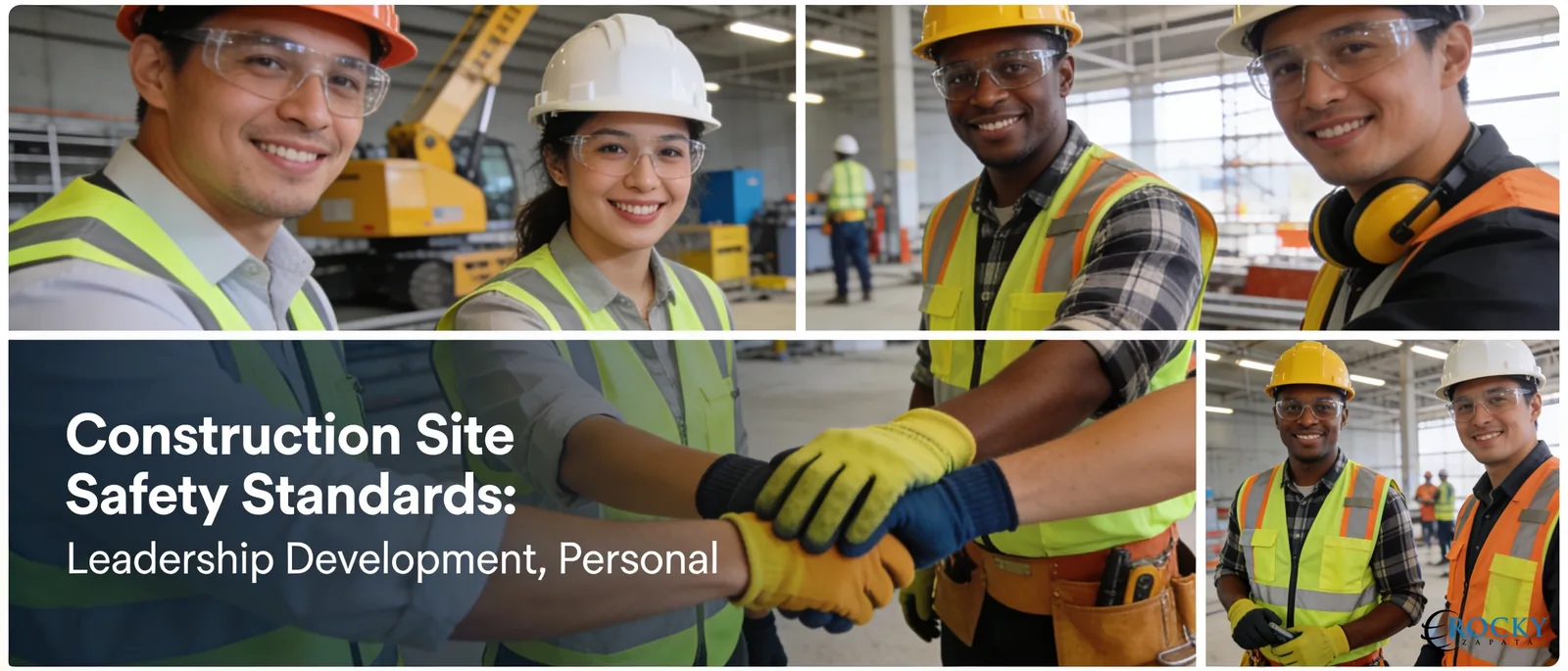
Construction Site Safety Standards: Leadership Development, Personal

Rocky Zapata Safety Consulting, based in Doral, Florida, establishes that construction site safety standards require mandatory hard hats, high-visibility vests. Fall protection systems above 6 feet. Regular hazard assessments, toolbox talks. OSHA compliance training form the foundation of best practices that protect workers and reduce workplace incidents.

Construction site safety standards, guided by OSHA recommendations outlined in publications like OSHA 3886, require employers to implement programs that detect and correct workplace hazards. With nearly 1 in 5 workplace deaths occurring in construction, firms like Rocky Zapata Safety Consulting, based in Doral, Florida, with 17 employees dedicated to safety consulting, help organizations build comprehensive safety cultures beyond basic compliance.

Construction site safety standards demand proactive hazard identification, rigorous OSHA compliance, and consistent workforce training. Nearly 1 in 5 workplace deaths in the United States occur in construction — a preventable loss. Our approach at Rocky Zapata Safety Consulting integrates site audits, safety program assessments. Construction Safety Consultants: Expert Protection for Your Job Site to reduce incidents and protect operational profitability.

Key Takeaways

  • OSHA establishes and enforces construction safety standards through formal regulations and recommended practices.
  • Construction sites require comprehensive hazard management programs addressing heavy machinery, materials, and equipment risks.
  • Safety managers oversee both project execution and team protection across dynamic, high-risk work environments.
  • Rocky Zapata Safety Consulting's 17-person team provides expert safety guidance for construction operations.

Why Do Construction Sites Remain So Dangerous?

Construction is one of the deadliest industries in the United States, with nearly 1 in 5 workplace deaths occurring in the construction sector. A figure that demands serious attention from every employer, manager, and safety professional in the field.

The danger is not accidental. Construction sites are dynamic environments where conditions shift daily, crews rotate. New hazards emerge with every phase of a project. Heavy machinery, hazardous materials, elevated work surfaces, and compressed timelines all converge in the same space. That combination creates risk at a scale few other industries match.

What Makes Construction Hazards So Difficult to Control?

Site hazard control is challenging because no two job sites are identical. Hazards that are absent on Monday can appear by Wednesday when a new subcontractor arrives or a structural phase changes. Static safety plans fail in dynamic environments — which is exactly why ongoing hazard identification and real-time corrective action are non-negotiable.

Why Is Compliance Alone Not Enough?

Meeting construction site safety standards reduces exposure, but compliance is a floor, not a ceiling. A construction safety checklist helps teams identify known hazards systematically. Checklists only work when backed by genuine safety culture and consistent enforcement. Without both, documentation becomes a formality rather than a safeguard.

Rocky Zapata Safety Consulting has long worked to close that gap. Our commitment — reducing workplace incidents and improving client profitability through tailored safety programs. Is grounded in the understanding that reactive safety costs far more than proactive prevention. The losses from a single serious incident extend well beyond the immediate injury.

What Are the Core Construction Site Safety Standards?

Construction site safety standards are the federally enforced rules and employer-driven programs that define how hazards are identified, controlled, and eliminated on every job site. OSHA — the Occupational Safety and Health Administration — sets and enforces these standards, making compliance a legal baseline for every construction employer operating in the United States.

At Rocky Zapata Safety Consulting, we work with clients to understand that baseline and then push well beyond it. OSHA compliance is the floor, not the ceiling. Employers are required by law to maintain a program that actively detects and corrects workplace hazards. Not simply documents them. A passive binder of rules does not constitute a safety program. Real compliance means continuous hazard identification, corrective action, and accountability at every level of the organization.

Why Does OSHA Compliance Alone Fall Short?

Meeting OSHA standards is essential, but it does not guarantee a safe work environment. Creating genuine safety requires proactive measures and a commitment to embedding safety as a core organizational value. We consistently see that companies treating compliance as a checklist exercise. Rather than a cultural commitment — experience higher incident rates and greater regulatory exposure.

What Does a Standards-Based Safety Program Include?

A program built on construction site safety standards typically addresses these foundational elements:

  • Hazard detection and correction — systematic processes to find and fix risks before incidents occur
  • OSHA compliance training — ensuring every worker understands applicable regulations and their own responsibilities
  • Construction safety management — structured oversight of site operations, subcontractors, and daily work conditions
  • Documented safety program assessments — regular reviews that measure program effectiveness against regulatory requirements
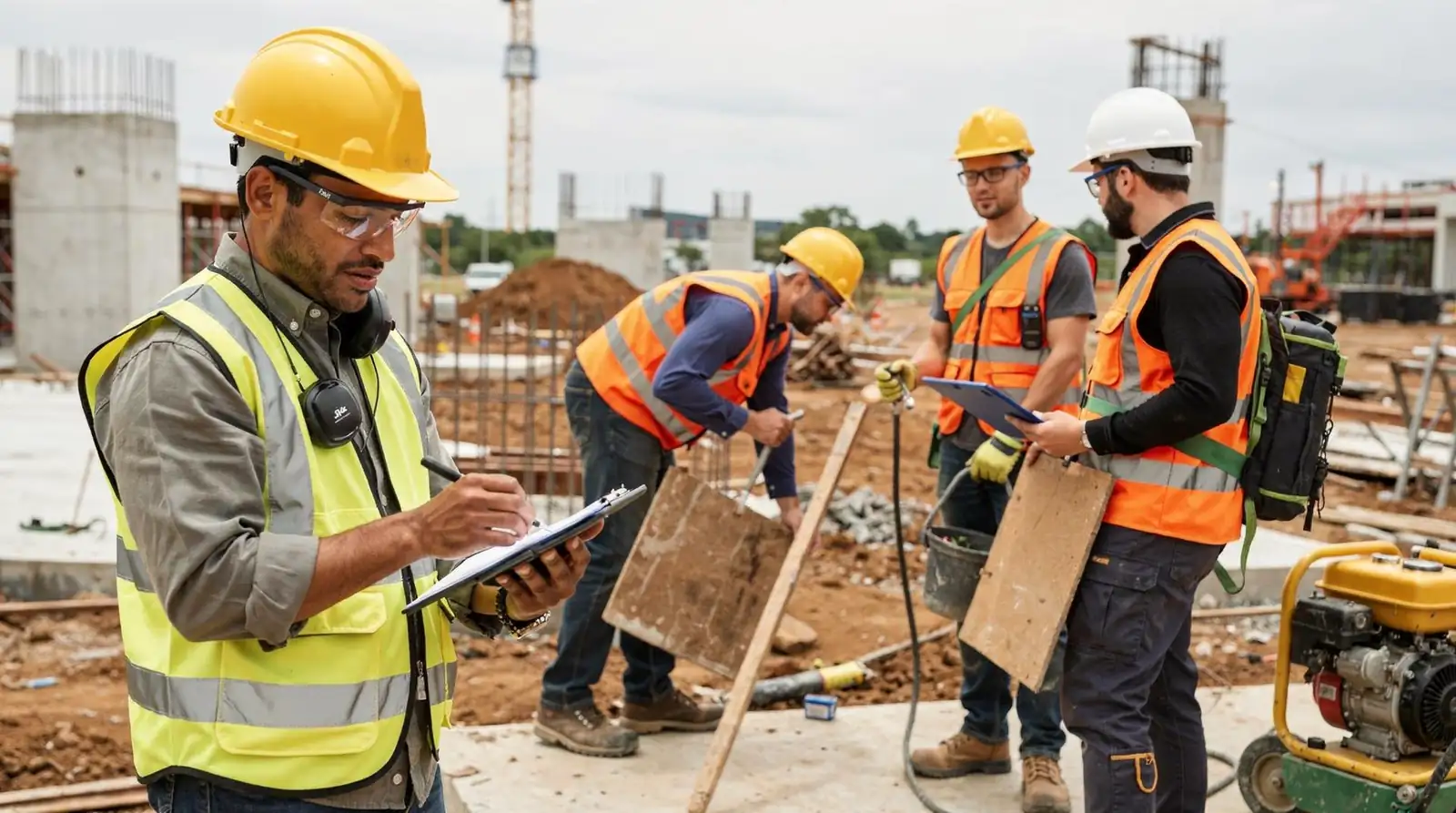
Our services at Rocky Zapata Safety Consulting include OSHA compliance training. Construction safety management precisely because these two pillars support everything else. Standards without training are unenforceable. Training without management oversight loses momentum. Together, they form the foundation of a program that protects workers and strengthens your bottom line.

How Does a Construction Safety Checklist Protect Workers?

A construction safety checklist protects workers by converting abstract safety requirements into concrete, repeatable actions that teams perform before, during, and after every shift. Without structured checklists, hazards go undetected, compliance gaps widen, and the risk of serious injury rises sharply.

At Rocky Zapata Safety Consulting, our approach treats checklists as living documents — not paperwork filed and forgotten. A secure job site depends on continuous effort. Daily hazard walks, pre-shift equipment inspections, and disciplined housekeeping routines form the operational backbone of any effective checklist. Each of those actions closes a window of exposure before an incident can occur.

What Should a Daily Construction Safety Checklist Include?

A well-structured daily checklist addresses the most common sources of site risk. Our field-tested framework covers:

  • Pre-shift equipment inspections — verify mechanical integrity before machinery operates
  • Daily hazard walks — scan active work zones for new or shifting conditions
  • Good housekeeping checks — clear debris, secure materials, and maintain egress paths
  • PPE verification — confirm workers wear appropriate protective equipment for each task
  • Emergency access review — ensure exits, first-aid stations, and fire suppression equipment remain unobstructed

No single item on that list is optional. Skipping one creates a gap that compounds every other risk on site.

How Do Audits Strengthen Checklist Effectiveness?

Checklists capture daily conditions; audits reveal systemic patterns. Expert job site audits are comprehensive evaluations designed to assess compliance with construction site safety standards. Identify potential hazards that routine checks may overlook. cite-1 In complex work environments, Workplace Safety Inspections: Expert Job Site Audits & Hazard Identification are paramount for mitigating risks and maintaining regulatory compliance.

Rocky Zapata Safety Consulting provides thorough safety program assessments tailored to the construction industry, ensuring that checklists align with current OSHA requirements and site hazard control priorities. Our assessments identify where daily procedures fall short and recommend targeted corrective actions. Turning compliance from a checkbox exercise into a genuine risk-reduction strategy.

Consistent checklist use, reinforced by periodic expert audits, is the most reliable path to a workforce that returns home safely every day.

What Does Effective Site Hazard Control Look Like?

Effective site hazard control combines proactive identification, structured programs. A workplace culture where every crew member treats safety as a shared responsibility. Organizations that wait for incidents to act lose far more — in downtime, liability. Human cost — than those that build prevention into daily operations.

At Rocky Zapata Safety Consulting, our approach centers on three interconnected priorities: safety compliance, operational efficiency. Safety Risk Mitigation: Strategic Risk Assessment & Hazard Control Services. These are not separate goals. They reinforce each other on every job site we serve.

Why Are Proactive Measures the Foundation of Hazard Control?

Reactive safety programs address damage after it occurs. Proactive measures address current hazards and build a lasting culture of safety among workers. One where reporting a near-miss is routine, not exceptional. cite-1 That cultural shift is what separates compliant job sites from truly safe ones.

Proactive hazard control typically includes:

  • Routine job site audits to surface emerging risks before they escalate
  • Pre-task hazard assessments conducted before each phase of work begins
  • Clear reporting channels so workers flag concerns without hesitation
  • Documented corrective actions with assigned accountability and deadlines

What Role Does a Formal Safety Program Play in Controlling Hazards?

Establishing a formal safety and health program at a job site is one of the most effective ways to address workplace hazards systematically. cite-2 A structured program gives supervisors and crews a consistent framework. Not a binder that collects dust, but a living set of protocols that guides daily decisions.

Our team helps clients build programs that align with construction site safety standards and integrate directly with their operations. The result is a site where hazard control is not an afterthought but an embedded discipline.

Effective construction safety checklist protocols anchor this work. Checklists translate broad safety standards into specific, verifiable actions — making compliance measurable and accountability clear. When every inspection, every toolbox talk. Every corrective action is documented, the entire safety program gains the evidence base it needs to improve continuously.

How Can Safety Culture Transform a Construction Workforce?

A strong safety culture transforms a construction workforce by replacing rule-following with genuine shared ownership of every worker's well-being. Construction site safety standards become self-reinforcing when crews trust one another, communicate openly. Treat safety as a collective responsibility — not a management mandate.

Safety culture is not a poster on a wall. It is the lived belief that nothing matters more than every worker going home safe at the end of the shift. That belief takes root through trust, clear communication, and the understanding that safety belongs to everyone on the site. From the project superintendent to the newest laborer.

What Does a Genuine Safety Culture Look Like on a Job Site?

A genuine safety culture shows up in daily behavior, not just documentation. Workers speak up about hazards without fear of retaliation. Supervisors model the same construction safety checklist discipline they expect from their crews. Near-misses get reported and reviewed, not buried.

  • Trust between workers and leadership
  • Open, consistent communication about hazards
  • Shared accountability at every level of the workforce
  • Proactive reporting of unsafe conditions

How Do Expert Advisors Help Build That Culture?

Going beyond basic compliance requires outside expertise. Companies that develop comprehensive safety plans. Actively cultivate a safety culture outperform those that treat OSHA requirements as a finish line rather than a starting point. Trusted advisors bring structured frameworks for site hazard control, closing the gap between written policy and field reality.

Rocky Zapata Safety Consulting delivers expert guidance, hands-on workshops, and practical exercises designed to embed safety compliance into daily operations. Our approach moves organizations from reactive incident response to proactive risk reduction. Building a workforce where safety is not enforced from above but owned from within.

What Training Programs Strengthen Construction Safety Compliance?

Structured training in fall protection and the correct use of personal protective equipment forms the foundation of any credible construction safety program. cite-3 Businesses that invest in targeted safety education reduce regulatory exposure. Build workforces capable of identifying hazards before incidents occur.

At Rocky Zapata Safety Consulting, our service portfolio is built around this principle. We offer safety training programs and safety staffing solutions alongside OSHA compliance training and construction safety management. A combination designed to address both the knowledge gaps and the personnel gaps that undermine construction site safety standards. Training is not a one-time event. It is an ongoing commitment that keeps crews aligned with current regulations and site-specific requirements.

Why Is Understanding Safety Consulting Services Vital for Florida Businesses?

Understanding safety consulting services is vital for Florida businesses aiming to comply with regulations and maintain safe workplaces. cite-4 Regulatory requirements shift, and organizations that rely on outdated internal programs risk costly violations and preventable injuries. Partnering with an experienced consulting firm ensures training content stays current and relevant.

What Core Topics Should a Construction Safety Training Program Cover?

A well-structured program addresses the hazards most likely to cause serious harm on active job sites. Our training programs prioritize the following areas:

  • Fall protection techniques and equipment inspection
  • Correct selection and use of personal protective equipment (PPE)
  • OSHA compliance requirements specific to construction operations
  • Hazard recognition and site hazard control procedures
  • Emergency response and incident reporting protocols

Each topic connects directly to a construction safety checklist that crews can apply daily. Short, focused training sessions reinforce these skills without pulling workers off the job for extended periods. The result is a workforce that operates with confidence, consistency. A clear understanding of what safe performance looks like on every shift.

How Do Inspections and Audits Reduce Incident Rates?

Regular job site audits directly minimize workplace accidents by verifying that safety protocols are implemented — not just documented. cite-1 Without structured audits, hazard gaps go undetected until an incident forces the issue.

At Rocky Zapata Safety Consulting, our audit process treats construction site safety standards as a living framework, not a static checklist. Audits surface the difference between what a safety program says and what workers actually do on the ground. That gap is where incidents happen.

What Does a Construction Safety Audit Actually Examine?

A thorough audit evaluates whether construction safety checklist items are being followed consistently across every phase of a project. Our team reviews documentation, observes active work conditions, and interviews crew members to confirm that protocols translate into daily practice. Findings are ranked by severity so corrective action targets the highest-risk exposures first.

Why Is Choosing the Right Consulting Partner So Important?

Selecting the right safety consulting firm is a critical decision. Especially for businesses operating in competitive markets like Florida, where regulatory scrutiny is high. cite-4 The wrong partner produces a report; the right partner produces measurable risk reduction. Rocky Zapata Safety Consulting delivers both OSHA compliance expertise and practical site hazard control strategies that hold up under inspection.

Our audit process produces three concrete outcomes:

  • Hazard identification — pinpointing physical, procedural, and behavioral risks before they escalate
  • Compliance verification — confirming alignment with OSHA standards and applicable state regulations
  • Corrective action planning — prioritizing remediation steps by risk severity to protect workers and reduce liability

Safety compliance is essential for any organization that wants to protect its workforce and its bottom line. Audits are the mechanism that keeps compliance real.

How Should You Partner With a Safety Consulting Expert?

Partnering with a safety consulting expert starts with selecting a firm that brings dedicated, specialized professionals. Not generalists — to every engagement. Rocky Zapata Safety Consulting, based in Doral, Florida, fields a focused team of 17 professionals whose sole purpose is delivering measurable safety outcomes for clients.

The right partnership goes beyond a one-time audit. Our approach integrates construction site safety standards, operational efficiency. Sustainability into every client engagement, ensuring that safety compliance becomes a permanent organizational capability rather than a checkbox exercise.

What Should You Look for in a Construction Safety Partner?

Look for a firm that offers specialized services aligned to your industry's specific risks. Rocky Zapata Safety Consulting provides safety consulting designed to strengthen operational efficiency and long-term sustainability. A credible partner brings structured programs, not generic advice.

Key qualities to evaluate when selecting a safety consulting firm:

  • Specialized expertise in construction and industry-specific hazard management
  • A structured construction safety checklist methodology for audits and assessments
  • Proven site hazard control protocols that translate into measurable loss reduction
  • Dedicated professionals — not rotating contractors — assigned to your account

Why Do Reporting Systems Matter in a Safety Partnership?

Simple reporting systems drive continuous improvement on every job site. cite-5 Without clear, accessible reporting, hazard data goes uncaptured and corrective action stalls. Our team builds reporting frameworks that make it easy for workers at every level to flag risks before incidents occur.

A strong partnership means your safety program evolves. Data from reporting feeds back into updated checklists, revised hazard controls, and stronger compliance outcomes over time.

Construction site safety standards and best practices represent the foundation of operational excellence and workforce protection. By implementing comprehensive compliance frameworks, conducting rigorous hazard assessments. Fostering a culture of accountability, organizations establish environments where safety becomes integral to daily operations. The commitment to these standards directly translates to reduced incidents, improved profitability, and sustainable business growth. Prioritizing construction safety demonstrates organizational leadership. Positions your company as a trusted industry partner dedicated to protecting both personnel and project success.

FAQ

Why is construction one of the deadliest industries in the United States?

Nearly 1 in 5 workplace deaths in the United States occur in construction, driven by heavy machinery, hazardous materials, elevated work surfaces. Compressed timelines converging in the same dynamic environment.

Why does OSHA compliance alone fail to protect construction workers?

Compliance sets a minimum standard, not a ceiling. Checklists and regulations only function as genuine safeguards when backed by a real safety culture. Consistent enforcement across the entire workforce.

How does Rocky Zapata Safety Consulting help construction firms reduce incidents?

The 17-person team based in Doral, Florida integrates site audits, safety program assessments. Expert guidance to build comprehensive safety cultures that reduce incidents and protect operational profitability.