


Key Takeaways
- Managers track injury frequency rates, near-miss reporting, inspection completion rates, and corrective action closure times.
- Job site audits anchor every safety quick start guide by documenting hazards and compliance gaps before drafting procedures.
- A manager safety quick guide fits in a pocket and includes hazard reporting steps, stop-work triggers, and escalation contacts.
- Bilingual delivery matters, so Rocky Zapata Safety Consulting translates all materials into English and Spanish.
What is a manager safety quick guide?
How do short safety manuals help managers track performance?
What makes concise safety procedures work on a job site?
- Audit the job site to document hazards and compliance gaps.
- Select the metrics the guide will track, including inspection completion and corrective action closure.
- Draft the procedures around the hazards the audit confirmed.
- Train supervisors on the guide and assign ownership.
- Review the metrics and revise the guide on a set schedule.

Why do managers need quick safety guides?
What should a manager safety quick guide contain?
How do quick safety guides differ from full safety manuals?
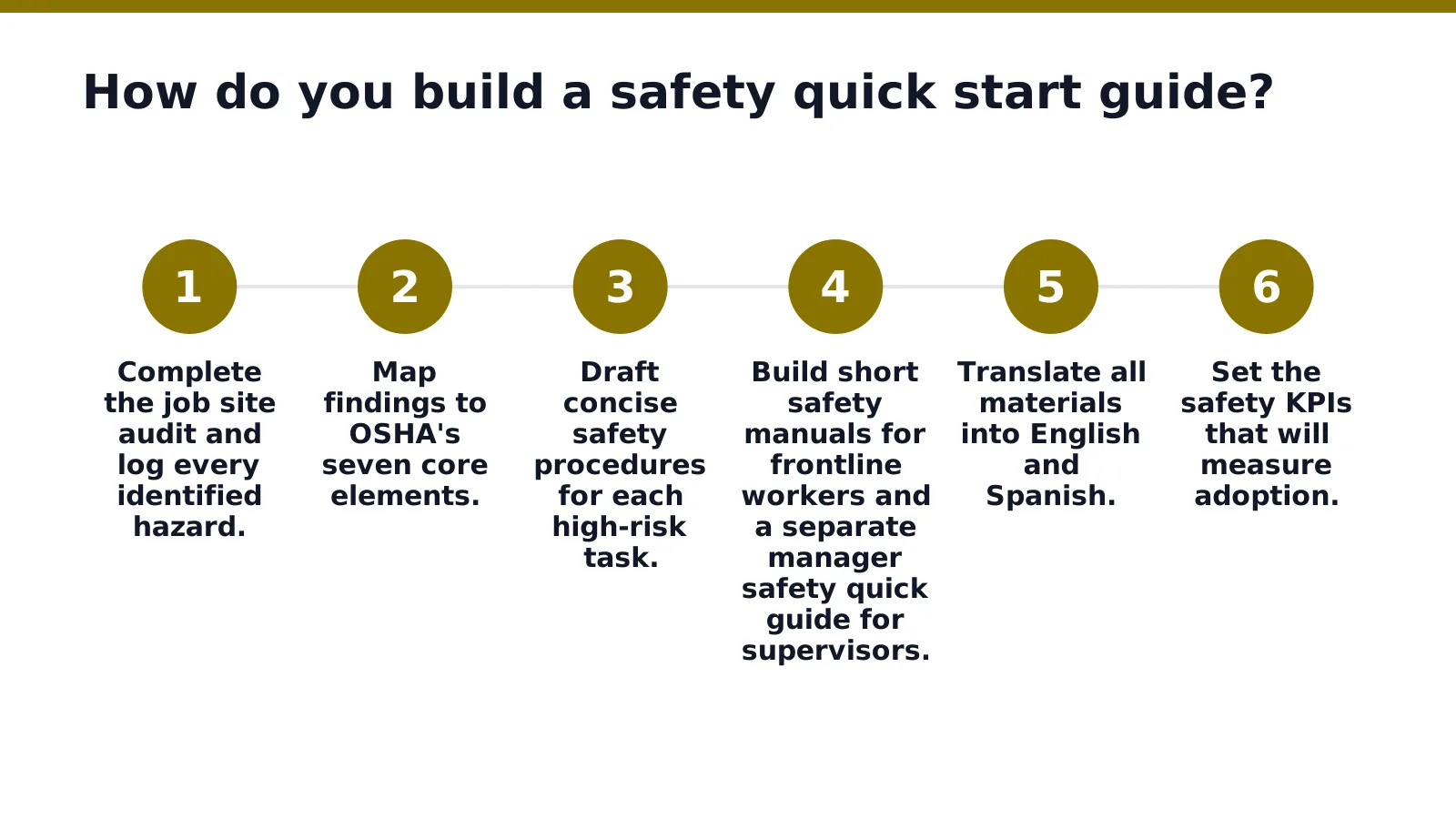
How do you build a safety quick start guide?
What steps produce a usable guide?
- Complete the job site audit and log every identified hazard.
- Map findings to OSHA's seven core elements.
- Draft concise safety procedures for each high-risk task.
- Build short safety manuals for frontline workers and a separate manager safety quick guide for supervisors.
- Translate all materials into English and Spanish.
- Set the safety KPIs that will measure adoption.
Which training content belongs inside the guide?
How do we measure whether the guide works?
What steps keep your team safe daily?
What does a daily safety routine look like?
- Clear every workspace of clutter. Remove debris, tools, and materials from walkways before work begins.
- Verify hazard reporting channels. Confirm every worker knows how to report incidents or hazards through the tracking system.
- Schedule regular breaks. Encourage workers to step away and rest so they stay focused and use better judgment.
- Hold a brief safety meeting. Reinforce the manager safety quick guide and address any new hazards from the previous shift.
- Review compliance tracking. Check that safety software captures all reported hazards and required follow-ups.
How do we keep workers alert through long shifts?
What role do safety meetings play daily?
How do you avoid common safety mistakes?
- Audit current procedures for reactive gaps.
- Refresh manuals against current OSHA standards.
- Retrain supervisors on the updated quick guide.
- Partner with a safety consulting firm to align strategy with organizational needs and avoid regulatory fines.