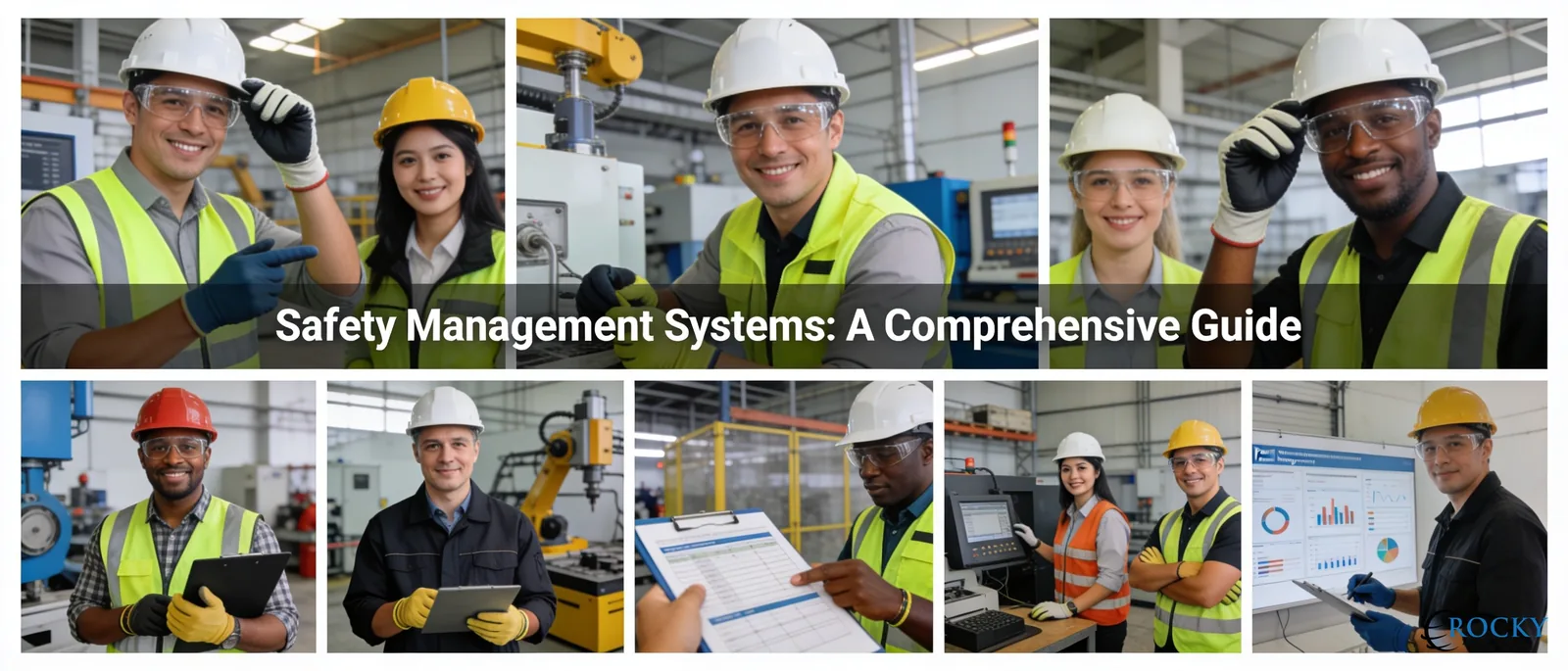
Safety Management Systems: A Comprehensive Guide

Rocky Zapata Safety Consulting, headquartered in Doral, Florida, delivers comprehensive safety management systems guides covering hazard identification, risk assessment protocols, incident investigation frameworks, emergency response planning, and regulatory compliance documentation. A structured SMS integrates four core components: policy development, risk management, safety assurance. Safety promotion, ensuring organizations maintain proactive workplace protection standards.

A comprehensive Safety Management System (SMS) guide covers structured, company-wide processes that enable proactive, risk-based decision-making across daily operations, including hazard identification, data analysis. Continuous risk assessment — frameworks that organizations like Rocky Zapata Safety Consulting, a 17-employee firm based in Doral, Florida, apply to help businesses achieve regulatory compliance and workplace safety excellence.

Comprehensive safety management systems serve as the backbone of proactive, compliant workplace safety. Especially in high-risk sectors like construction and healthcare. At Rocky Zapata Safety Consulting, our SMS implementation approach integrates risk assessment frameworks, regulatory compliance, and hazard identification. We build connected, predictive safety protocols that reduce incidents and improve client profitability across every engagement we undertake.

Key Takeaways

  • Safety Management Systems provide structured, company-wide processes for effective risk-based decision-making in daily operations.
  • SMS implementation proves essential for high-risk sectors including construction, utilities, and infrastructure industries.
  • Rocky Zapata Safety Consulting, based in Doral, Florida, employs 17 professionals in safety consulting.
  • Well-executed SMS reduces incident costs while maintaining compliant and efficient workplace safety standards.

What Is a Safety Management System?

A safety management system (SMS) is a structured, company-wide framework that provides effective risk-based decision-making for daily business functions. cite-1 Safety management systems help organizations deliver products. Services at the highest level of safety while maintaining consistently safe operations. cite-1

At Rocky Zapata Safety Consulting, we view an SMS not as a compliance checkbox. As the operational backbone of a resilient workplace. Without one, organizations react to incidents after the damage is done. Absorbing costs, disruptions, and reputational harm that a proactive framework prevents.

What Are the Key Processes Inside a Safety Management System?

According to the International Civil Aviation Organization (ICAO), every effective SMS is built on five core processes:

  • Hazard identification — systematically locating risks before they cause harm
  • Occurrence reporting — capturing near-misses and incidents to build institutional knowledge
  • Risk management — evaluating and controlling identified hazards
  • Performance measurement — tracking safety outcomes against defined benchmarks
  • Quality assurance — continuously verifying that safety processes function as intended

Each process feeds the next. Strong hazard identification produces better occurrence data, which sharpens risk management decisions.

How Does a Safety Management System Support Daily Business Functions?

An SMS integrates safety into everyday workflows rather than treating it as a separate department. Risk-based decision-making becomes part of how supervisors plan work, allocate resources, and respond to changing site conditions. That integration is what separates organizations that merely comply from those that genuinely perform.

We help clients implement safety management practices that embed these five processes into their existing operations. Making safety a driver of efficiency, not an obstacle to it. Learning how to build safety systems that actually hold up under real-world pressure is precisely what our consulting work is designed to deliver.

Why Do Organizations Need Safety Management Systems?

Safety management systems represent a fundamental shift from reactive accident response to proactive risk management. cite-2 Organizations that rely on outdated, compliance-only approaches leave their workforce exposed to preventable hazards — and absorb the financial and operational losses that follow.

Traditional safety programs treat incidents as triggers for action. Modern workplaces demand something more rigorous. Complex regulatory environments, multi-trade job sites, and interconnected workflows create risk profiles that no checklist or siloed spreadsheet adequately addresses. When safety infrastructure fails to match operational complexity, incidents escalate — and so do costs.

What Makes Reactive Safety Programs Insufficient?

Reactive programs respond to harm after harm has already occurred. In high-risk sectors like construction and infrastructure, manual processes. Disconnected systems cannot keep pace with the volume and variety of hazards present on any given day. The result is a gap between what compliance documents promise and what workers actually experience on the ground.

How Do Safety Management Systems Improve Organizational Performance?

When organizations implement safety management effectively, they transform how hazards are identified, how workplace risk is assessed. How their most valuable assets — their people — are protected. A structured system creates consistent decision-making frameworks across every level of the organization, from field crews to executive leadership.

Rocky Zapata Safety Consulting has long pursued this standard, building Customized Safety Programs: Tailored Safety Manuals & Management Systems designed to reduce workplace incidents and improve client profitability directly.

The core advantages of a well-built system include:

  • Proactive hazard identification before incidents occur
  • Consistent risk assessment across all job sites and departments
  • Documented compliance pathways that satisfy regulatory requirements
  • Reduced operational losses tied to workplace injuries and downtime

Knowing how to build safety systems that deliver these outcomes requires both technical expertise. A deep understanding of industry-specific risk. Precisely what structured safety consulting provides.

What Are the Core Components of an SMS?

A safety management system is a structured, organization-wide framework designed to continuously improve safety performance by enabling teams to identify hazards, collect and analyze data. Assess risks on an ongoing basis. cite-3 Every effective SMS shares four foundational components: safety policy, safety risk management, safety assurance, and safety promotion.

These components do not operate in isolation. Each one feeds the next, creating a closed loop that keeps safety performance moving forward rather than stagnating at baseline compliance.

Core SMS components at a glance:

  • Safety Policy — Establishes leadership commitment, accountability structures, and the organization's safety objectives
  • Safety Risk Management — Identifies hazards, evaluates likelihood and severity, and applies controls before incidents occur
  • Safety Assurance — Monitors the effectiveness of those controls through audits, inspections, and performance data
  • Safety Promotion — Builds a culture of safety through training, communication, and shared organizational values

How does an SMS proactively prevent workplace incidents?

The defining purpose of an SMS is to mitigate safety risks before they escalate into accidents. Reactive programs wait for something to go wrong. A properly implemented SMS surfaces hazards early, analyzes the data. Applies corrective controls while the window to act is still open. That proactive posture is what separates high-performing safety programs from organizations that simply check compliance boxes.

How do audits and assessments fit into an SMS?

Workplace Safety Inspections: Expert Job Site Audits & Hazard Identification are comprehensive evaluations designed to assess compliance with safety standards and identify potential hazards. Making them the operational engine of the Safety Assurance component. cite-4 Our team at Rocky Zapata Safety Consulting delivers thorough safety program assessments alongside OSHA compliance training, construction safety management, safety training programs, and safety staffing solutions. When we implement safety management frameworks for clients, audits provide the measurable evidence needed to validate that controls are working. To build safety systems that hold up under real-world conditions.

How Do You Implement Safety Management Successfully?

Implement safety management by establishing a structured, organization-wide approach that systematically identifies hazards, assesses risks, and drives continuous improvement. Organizations that skip this foundation expose themselves to regulatory penalties, preventable incidents, and measurable financial losses.

At Rocky Zapata Safety Consulting, we guide clients through every stage of this process. Our expert guidance, workshops, and practical exercises foster an environment of safety compliance, operational efficiency. Strategic risk reduction — turning safety from a checkbox into a competitive advantage.

What Is the Core Purpose of a Safety Management System?

Safety management systems exist to give organizations a reliable, repeatable method for managing safety across every level of operations. Rather than reacting to incidents after the fact, a well-built SMS enables proactive hazard identification and data-driven risk decisions. The result is a workplace where safety performance improves continuously — not sporadically.

Does an SMS Help Meet Regulatory Requirements?

A properly structured SMS serves as a formal mechanism for satisfying statutory obligations. For example, Title 14 of the U.S. Code of Federal Regulations — enforced by the Federal Aviation Administration — can be met through a compliant SMS framework. Regulatory alignment protects organizations from costly violations and demonstrates due diligence to oversight bodies.

The Four Steps We Follow to Build Safety Systems

How to build safety systems that last requires a disciplined sequence:

  1. Assess current state — Audit existing policies, procedures, and incident records to identify gaps.
  2. Define the safety policy — Establish leadership commitment and clear accountability at every organizational level.
  3. Implement risk controls — Deploy targeted hazard mitigation measures informed by data, not assumption.
  4. Monitor and improve — Track performance metrics and refine the system through regular reviews and practical exercises.

Each step reinforces the next. Organizations that compress or skip steps undermine the entire framework — and absorb the losses that follow. We help clients execute every phase with precision, ensuring durable compliance and measurable risk reduction.

How Do You Build Safety Systems From the Ground Up?

Building effective safety management systems starts with replacing checkbox-style compliance with smart, connected, and predictive safety protocols. cite-5 Organizations that treat safety as a strategic function. Rather than a regulatory formality — consistently outperform those that react only after incidents occur.

The foundation is intentional. Every layer of a well-constructed system must link hazard identification, risk assessment, and corrective action into a single, coherent workflow. Without that connectivity, gaps form. Gaps cost lives and money.

What Does It Mean to Implement Safety Management Proactively?

To implement safety management proactively means addressing hazards before they escalate into incidents. Proactive measures do more than resolve current safety issues. They cultivate a genuine culture of safety among workers at every level of the organization. cite-4 When employees see leadership acting on hazard reports. Closing corrective-action loops, safety becomes a shared value rather than a top-down mandate.

How Do You Know Where to Start When Learning How to Build Safety Systems?

The most reliable starting point is a thorough program assessment. How to build safety systems effectively depends on understanding the specific risk profile of your industry. Rocky Zapata Safety Consulting provides safety program assessments tailored to industries such as construction. Healthcare, precisely because a one-size-fits-all approach fails to address sector-specific hazards.

From assessment, the build-out follows a clear sequence:

  1. Identify hazards — document every foreseeable risk across all job functions
  2. Assess and prioritize risks — rank hazards by likelihood and severity
  3. Establish controls — implement engineering, administrative, and PPE-based mitigations
  4. Conduct inspections and audits — regular audits are paramount for mitigating risks and maintaining regulatory compliance in complex work environments
  5. Review and improve — close the loop with corrective actions and performance tracking

No system is static. Continuous review transforms a compliance document into a living operational tool. One that protects workers, reduces losses, and strengthens the organization's long-term performance.

What Role Does Hazard Identification Play in SMS?

Hazard identification is one of the foundational processes within any safety management system. Defined by the International Civil Aviation Organization (ICAO). cite-1 Without systematic hazard identification, organizations react to incidents rather than prevent them. And that reactive posture costs far more than a proactive program ever would.

The ICAO identifies hazard identification alongside occurrence reporting, risk management, performance measurement. Quality assurance as the core processes that make an SMS function. cite-1 Each process depends on the others. Hazard identification feeds risk management. Risk management informs performance measurement. The entire system breaks down if hazard identification is weak.

Why Are Expert Job Site Audits Essential for Hazard Identification?

Expert job site audits are the primary mechanism for surfacing hazards before they cause harm. These audits are crucial for minimizing workplace accidents and ensuring that safety protocols are effectively implemented across every work area. cite-4 A thorough audit does not simply check boxes — it uncovers conditions, behaviors, and gaps that routine observation misses.

At Rocky Zapata Safety Consulting, our audit process is structured to deliver findings that translate directly into corrective action.

How Does Hazard Identification Contribute to a Safer Work Environment?

Effective hazard identification techniques drive measurable risk reduction and foster a culture where safety becomes operational habit rather than afterthought. cite-4 When workers and supervisors consistently identify and report hazards, the organization builds a living record of risk. One that improves over time.

The key outputs of a strong hazard identification process include:

  • Documented hazard inventories that inform risk prioritization
  • Corrective action plans tied to specific job site conditions
  • Trend data that supports continuous improvement across safety programs

Learning to implement safety management correctly starts here. Knowing how to build safety systems that last means treating hazard identification not as a one-time audit but as an ongoing organizational discipline.

How Does SMS Support Regulatory Compliance?

Safety management systems create a structured, documented framework that aligns organizational safety practices with regulatory requirements at every level. Without that alignment, businesses face citations, operational shutdowns, and liability exposure that erode profitability far faster than the cost of compliance ever would.

At Rocky Zapata Safety Consulting, compliance is a cornerstone of everything we do. Our OSHA compliance training is a core service precisely because regulatory adherence is not optional. It is the baseline from which every effective safety program grows. We help clients build the documentation, training records, and audit trails that regulators expect to see.

How Does SMS Align With Established Safety Standards?

Recognized SMS frameworks provide detailed guidance for service providers implementing safety programs in accordance with established standards such as Annex 19. cite-3 That guidance is not theoretical. It gives organizations a practical roadmap for structuring hazard identification, risk assessment. Corrective action processes in ways that satisfy regulatory scrutiny. Following a recognized framework also signals to regulators that a company operates proactively rather than reactively.

Does SMS Compliance Guidance Apply Beyond Individual Organizations?

SMS implementation guidance extends beyond individual businesses. Regulatory bodies and governing authorities use the same frameworks to oversee their service providers' safety management practices, creating a consistent compliance standard across entire industries. This top-down alignment means that when your organization implements safety management correctly, it speaks the same compliance language as the agencies reviewing your records.

The practical takeaway is straightforward:

  • Documented SMS processes produce audit-ready evidence of compliance
  • OSHA compliance training closes the gap between policy and worker behavior
  • Alignment with recognized standards reduces regulatory risk at every tier

How to build safety systems that satisfy regulators starts with choosing a framework that mirrors the standards those regulators already enforce — and partnering with consultants who know that framework inside and out.

How Can Rocky Zapata Strengthen Your Safety Program?

Rocky Zapata Safety Consulting, headquartered in Doral, Florida, delivers focused safety expertise through a dedicated team of 17 professionals committed exclusively to safety consulting. Organizations that lack structured safety support face rising incident costs, compliance gaps. Operational disruptions — all of which erode profitability over time.

Our work centers on one mission: reducing losses and improving workplace performance through tailored, industry-specific solutions. We do not offer generalist consulting. Every engagement is built around the specific risks, regulatory requirements, and operational realities of your industry.

What Services Does Rocky Zapata Safety Consulting Provide?

Rocky Zapata Safety Consulting offers a comprehensive suite of specialized services designed to address safety challenges at every level of an organization:

  • Safety management systems design and implementation
  • OSHA compliance training and regulatory guidance
  • Construction safety management programs
  • Safety staffing solutions for industries including construction and healthcare
  • Thorough safety program assessments tailored to each client's environment

These services work together to help organizations implement safety management practices that are both compliant and operationally efficient. A fragmented approach to safety leaves critical gaps; our integrated model closes them.

How Does Rocky Zapata Support Long-Term Operational Efficiency?

Sustainable safety performance requires more than periodic audits. Rocky Zapata Safety Consulting provides specialized services that ensure operational efficiency and sustainability across client organizations. When safety systems are properly structured, they reduce incident frequency, lower insurance exposure. Support consistent regulatory compliance — all of which directly strengthen the bottom line.

Learning how to build safety systems that last starts with the Safety Consulting Costs: Key Factors That Impact Your Investment Decision. Rocky Zapata Safety Consulting brings the focused expertise to make that possible.

Implementing a comprehensive safety management system represents a strategic investment in your organization's long-term viability and workforce protection. By establishing clear protocols, maintaining rigorous compliance standards. Fostering a culture of accountability, your business transforms safety from a compliance obligation into a competitive advantage. Rocky Zapata Safety Consulting remains committed to guiding organizations through this essential transformation, ensuring sustainable operational excellence. Measurable risk reduction across all industry sectors.

FAQ

What is a safety management system?

A safety management system is a structured, company-wide framework that provides effective risk-based decision-making for daily business functions, helping organizations deliver products. Services at the highest level of safety.

What are the five core processes inside an effective SMS?

Every effective SMS includes hazard identification, occurrence reporting, risk management, performance measurement. Quality assurance, with each process feeding the next to sharpen safety decisions.

Where is Rocky Zapata Safety Consulting located?

Rocky Zapata Safety Consulting operates out of Doral, Florida, with a team of 17 professionals dedicated to SMS implementation, risk assessment, and workplace safety compliance.