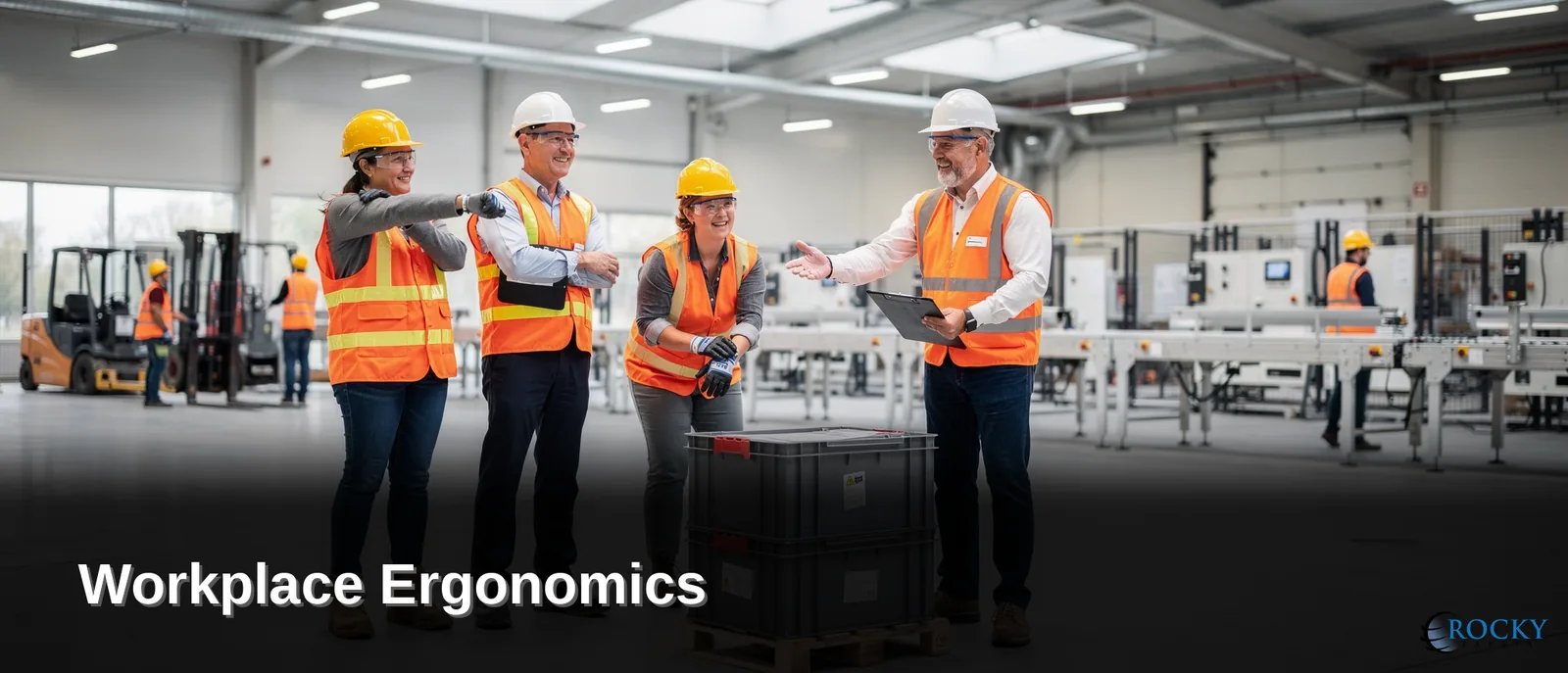
When it comes to workplace ergonomics, musculoskeletal injury prevention requires ergonomic task design that fits work demands to worker capabilities, targeting risk factors like heavy lifting, awkward postures, and repetitive motion. Rocky Zapata Safety Consulting builds ergonomics programs alongside OSHA compliance training and job site audits, reducing MSD exposure, cutting workplace injury rates, and strengthening regulatory compliance across construction, healthcare, and industrial operations.

Key Takeaways

  • Ergonomics designs work tasks to match worker capabilities and reduces work-related musculoskeletal disorders effectively.
  • MSDs affect muscles, nerves, blood vessels, ligaments, and tendons across 17 different occupational categories.
  • Workplace risk factors include lifting heavy items, bending, reaching overhead, and pushing loads.
  • Ergonomics programs provide guidelines that lower injury rates and improve overall workplace safety outcomes.

What Are Workplace MSDs and Why Do They Matter?

Musculoskeletal disorders (MSDs) damage muscles, nerves, blood vessels, ligaments, and tendons. A distinct injury category from cuts, burns, or falls. We treat this distinction as foundational to any workplace ergonomics program. MSDs develop gradually through repeated strain rather than a single incident. That slow onset makes them easy to overlook until a worker is already sidelined.

The stakes are higher than many operations managers realize. Work-related MSDs rank among the most frequently reported causes of lost or restricted work time across industries we serve. Every missed shift represents lost productivity, rising workers' compensation costs, and a gap that supervisors must scramble to fill. We consider unmanaged MSD exposure a direct threat to both worker health and operational continuity.

Compliance adds another layer of urgency for Florida employers. The regulatory landscape blends federal OSHA requirements with state-specific laws, creating a compliance environment we describe as intricate rather than straightforward. Businesses that treat MSD prevention as optional, rather than integrated into daily operations, expose themselves to both injury claims and regulatory scrutiny simultaneously.

Why do MSDs matter more than other workplace injuries?

MSDs matter because they accumulate silently, often going unreported until pain becomes debilitating. Unlike an acute injury with a clear cause, an MSD may result from months of repetitive motion, awkward posture, or sustained lifting. That delayed presentation makes early identification — through a structured ergonomic assessment guide — essential to catching risk before it becomes a claim.

Are MSDs preventable in industrial and healthcare settings?

Yes. We view MSD risk as manageable through deliberate task design, proper equipment selection, and consistent monitoring of physical demands. Healthcare and industrial employers face different risk factors. Both benefit from proactive evaluation rather than reactive claims management after injuries occur.

Which Tasks and Postures Increase Injury Risk?

Lifting heavy items, bending at the waist, reaching overhead, and pushing or pulling loads all elevate risk for musculoskeletal injury. Awkward postures and repetitive motion compound that risk further. We see these exposures across construction sites, healthcare facilities, warehouses, and office settings alike, and each demands a different lens for workplace ergonomics planning.

No single industry escapes this exposure. A warehouse associate pulling a loaded cart, a nurse repositioning a patient, and an office worker reaching for a monitor placed too far away all face the same underlying mechanism: physical demand exceeding the body's tolerance for that task.

Common High-Risk Task Categories

  • Manual lifting or lowering of heavy or awkwardly shaped items
  • Repetitive bending or twisting at the spine
  • Overhead reaching sustained for long periods
  • Pushing or pulling heavy loads across uneven surfaces
  • Repetitive hand and wrist motions performed at pace

An awkward posture forces joints or the spine away from a neutral, relaxed position during task performance. Reaching, twisting, and prolonged bending all qualify, and sustained exposure compounds the injury risk over time.

How do we identify these risks before they cause harm?

Our expert job site audits evaluate compliance with safety standards and pinpoint hazards before they escalate into lost-time injuries. We treat these evaluations as more than a compliance checkbox. Proactive hazard identification addresses today's safety gaps while building a durable culture of safety that protects the workforce long after our team leaves the site.

Identifying these tasks early separates reactive safety programs from resilient ones. Our consulting approach starts with observation, not assumption. Injury patterns reveal themselves in daily task execution long before an incident report does.

How Does Ergonomics Reduce Musculoskeletal Injuries?

Reducing musculoskeletal injuries starts with redesigning the job itself, not the worker. Workplace ergonomics shapes tasks, tools, and workstations to match human capability rather than forcing bodies to adapt to poor conditions. When lifting patterns, reach distances, and repetitive motions get engineered out of a role, strain-related injuries drop before they ever start.

We treat this design principle as the foundation of every msd prevention strategy we build for clients. Musculoskeletal disorders rarely stem from a single incident. They accumulate from repeated exposure to awkward postures, excessive force, and repetitive motion. Fixing the task design addresses the root cause instead of just treating symptoms after an injury report lands on someone's desk.

What Does an Ergonomic Assessment Actually Involve?

An ergonomic assessment guide starts with a full evaluation of the workplace, not a checklist glance. Our team identifies specific hazards, reviews applicable regulatory requirements, and maps operational needs unique to each site. Healthcare floors, warehouse lines, and office workstations each carry different risk profiles, so the assessment adapts to the environment rather than applying a generic template.

This groundwork produces a clear picture of where injury risk concentrates before we recommend a single change.

How Do Prevention Plans Turn Into Daily Practice?

Assessment findings only matter once they reach the floor through action. We build customized training programs tailored to the specific hazards each workplace assessment uncovers, translating ergonomic principles into habits workers actually follow.

Effective programs typically combine:

  • Task redesign targeting identified lifting, reaching, and repetitive-motion hazards
  • Training sessions built around the facility's actual risk findings, not generic modules
  • Ongoing reinforcement so ergonomic adjustments stick after the initial rollout

Consistent brand identification across every assessment and training module we deliver ensures safety directors. Operations managers recognize a unified, dependable standard behind each recommendation.

What Should an Ergonomic Assessment Guide Include?

A complete assessment guide starts with job design, not equipment lists. Workplace ergonomics rests on a simple principle: work tasks and job demands must fit the capabilities of the people performing them. Any framework that skips this foundation and jumps straight to purchasing chairs or wrist rests misses the point entirely.

We build our guides around three connected phases: evaluation, verification, and correction. Each phase carries equal weight in an effective ergonomic assessment guide.

How does the evaluation phase work?

Evaluation begins with observing how workers actually move through their tasks, not how job descriptions say they should. Our team documents postures, repetitive motions, and force demands across a full shift. This creates the baseline data every later decision depends on.

Why do inspections and audits matter for compliance?

Regular inspections and audits mitigate risk and keep operations aligned with regulatory requirements. Skipping this step leaves gaps that surface only after an injury or citation. We treat audits as ongoing checkpoints, not one-time events, because job demands shift as equipment, staffing, and production volume change.

A thorough guide typically includes:

  • Task-by-task hazard identification, covering lifting, reaching, and repetitive motion
  • Scheduled follow-up audits to confirm corrective measures hold under real conditions
  • Documentation trails that support regulatory compliance during inspections

Correction closes the loop. Once hazards surface, targeted training moves the fix from paper to practice. We deliver OSHA 10-hour and 30-hour outreach courses, hazard communication training, and fall protection certification to reinforce MSD prevention at the worker level. Training without prior evaluation wastes resources; evaluation without training changes nothing on the floor. Our guides link both, giving safety directors a repeatable cycle rather than a static checklist.

Why Are Office and Desk Jobs at Risk?

Desk-based roles carry real musculoskeletal risk, not just factory floors and job sites. Upper limb and neck musculoskeletal disorders rank among the most common occupational disorders worldwide. Desk work sits squarely inside that category. Static posture, repetitive keyboard motion, and poor monitor height compound over months into chronic pain, lost workdays, and rising claims costs for employers who assume "office work" means "low risk."

We built our consulting practice around correcting that assumption. Every industry we serve, from healthcare to industrial operations to corporate offices, faces some version of the same exposure: repeated motion, sustained postures, and workstations that were never designed for the humans using them.

What Makes Desk Work Riskier Than It Looks?

Office environments hide risk behind comfort. A chair feels fine for an hour. After eight hours, five days a week, small misalignments in wrist angle, screen height, or seat depth translate into cumulative strain. That accumulation, not a single incident, drives most desk-related MSD prevention failures we encounter during client assessments.

How Do We Address Office Ergonomic Risk?

We deliver training and consulting directly at the client's location, addressing desk-based hazards where they actually occur rather than through generic, off-site instruction. Our outreach training courses extend the same rigor we apply to construction. Healthcare clients to office teams, covering hazard recognition and safe work practices relevant to their specific setups.

Common desk-job risk factors we flag during an ergonomic assessment guide review include:

  • Monitor height forcing neck flexion or extension
  • Keyboard and mouse placement causing wrist deviation
  • Chair and desk mismatches that eliminate proper lumbar support
  • Prolonged static sitting without movement breaks
  • Phone or document positioning that twists the spine repeatedly

Correcting these factors early prevents costly, long-term claims down the road.

What Ergonomic Hazards Do Healthcare Workers Face?

Patient handling drives most ergonomic risk in healthcare settings. Lifting, repositioning, and transferring patients place sustained strain on nurses' backs, shoulders, and necks. Awkward postures at bedside, combined with repetitive reaching and pulling, compound that strain over a full shift.

We define workplace ergonomics the same way healthcare researchers do: the study of how staff interact with their work environment, and how that environment gets designed to be safe, comfortable, and efficient. Applied to a hospital floor or long-term care facility, this principle points directly at patient-handling demands as the central hazard category our clients need to address first.

What tasks create the highest injury risk in healthcare?

Certain recurring duties generate the bulk of musculoskeletal complaints we see across healthcare clients:

  • Manual patient transfers between beds, wheelchairs, and exam tables
  • Repositioning patients to prevent pressure injuries
  • Prolonged standing during procedures or charting
  • Awkward reaching around medical equipment and bed rails
  • Repetitive documentation tasks at poorly configured workstations

Each task compounds fatigue differently, but all five demand a structured response rather than ad-hoc fixes.

How does training reduce these risks?

Compliance training remains a core pillar of any effective safety strategy, and healthcare is no exception. We equip staff with the knowledge and hands-on skill needed to execute transfers and repositioning tasks safely, rather than relying on instinct or improvisation under time pressure.

Language access matters just as much as content. In Miami's multicultural workforce, bilingual instruction in English and Spanish ensures every team member, regardless of primary language, fully understands lifting technique, hazard recognition, and reporting procedures. We build our healthcare training programs around that standard. A safety message only works when every worker on the floor actually understands it.

How Do You Build an MSD Prevention Program?

Building a program starts with identifying physical risk factors before injuries occur. A structured framework combining hazard identification, task redesign, and employee training reduces or eliminates work-related musculoskeletal disorders while improving overall safety performance across a facility.

Our consulting team treats workplace ergonomics as a core pillar of any compliance strategy, not an afterthought. We evaluate how tasks, tools, and workstations interact with the people performing them, then recommend adjustments that lower strain without slowing production. This approach forms the foundation of effective MSD prevention across industrial, healthcare, and office environments alike.

A prevention program built on sound compliance strategies delivers measurable outcomes. Organizations that adopt them see stronger operational excellence, fewer workplace incidents, and higher employee morale. The true indicators that a program is working, not just documented.

What Does an Effective Program Include?

Most successful programs share a common structure. We recommend building around these components:

  • Baseline hazard identification across job tasks and workstations
  • An ergonomic assessment guide tailored to each department's physical demands
  • Task and equipment redesign to reduce repetitive strain
  • Ongoing employee training on safe body mechanics
  • Continued tracking of incident trends and morale indicators

Who Should Lead an MSD Prevention Initiative?

Safety directors and operations managers typically lead the initiative, supported by outside consulting expertise. Our team serves businesses across South Florida, West Coast Florida, and Central Florida, bringing regionally informed insight to each assessment. Consistent brand identification across every training material, audit report, and safety communication reinforces program credibility and keeps expectations aligned company-wide.

Partnering with experienced consultants shortens the learning curve. Rather than building a program from scratch, organizations gain a tested framework designed around measurable safety and morale outcomes.

Why Work With a Safety Consulting Partner?

Partnering with a dedicated safety consulting firm gives organizations structured guidance that reduces injury risk instead of leaving prevention to guesswork. Structured workplace ergonomics programs provide clear guidelines for reducing risk factors on the job. That structure translates into fewer workplace injuries over time. Without that framework, hazards get addressed reactively — after an injury, not before one.

We built Rocky Zapata Safety Consulting to close that gap. Our team designs programs around proven risk-reduction guidelines rather than generic checklists. MSD prevention becomes part of daily operations, not an afterthought.

What does a safety consulting partner actually deliver?

A qualified partner delivers assessment, implementation, and follow-through — three things internal teams rarely have bandwidth for simultaneously. We conduct on-site evaluations, translate findings into practical job task adjustments, and train staff to sustain those changes long after the consultants leave.

  • On-site hazard and posture evaluations tied to specific job tasks
  • Practical recommendations employers can implement without halting production
  • Training that builds internal ownership of safety practices
  • Follow-up support to confirm changes hold over time

Why does location and team size matter for consulting quality?

Proximity and staffing capacity directly affect how responsive a consulting partner can be. Rocky Zapata Safety Consulting is based in Doral, Florida, positioning our firm to serve Florida employers with direct, on-site attention rather than remote guesswork.

Our 17-person consulting team gives us the capacity to deliver hands-on ergonomic and safety support across multiple job sites simultaneously. That staffing level matters — thin consulting benches lead to delayed assessments and generic recommendations. Consistent brand identification across every engagement, from initial audit to final training session, ensures clients know exactly who is guiding their safety strategy at each step. We treat that continuity as a baseline standard, not a bonus feature.

FAQ

What causes workplace musculoskeletal injuries?

Heavy lifting, bending at the waist, reaching overhead, and pushing or pulling loads elevate MSD risk. Awkward postures and repetitive motion across construction, healthcare, warehouse, and office settings compound that exposure further.

Why do MSDs go unnoticed until they become serious?

MSDs accumulate silently through months of repetitive motion, awkward posture, or sustained lifting rather than a single incident. This delayed presentation makes early identification through structured ergonomic assessment essential before pain becomes debilitating.

How does Rocky Zapata Safety Consulting address MSD prevention?

Rocky Zapata Safety Consulting, based in Doral, Florida, builds ergonomics programs alongside OSHA compliance training and job site audits. This approach reduces MSD exposure, cuts workplace injury rates, and strengthens regulatory compliance.

Facts

  • Rocky Zapata Safety Consulting is located in Doral, Florida, US.
  • Rocky Zapata Safety Consulting has 17 employees.

Conclusion

In closing, workplace ergonomics represents a strategic investment in your organization's long-term profitability and operational excellence. By implementing comprehensive musculoskeletal injury prevention programs, you reduce costly losses, enhance employee productivity, and foster a culture of safety compliance. Rocky Zapata Safety Consulting brings expert guidance and proven methodologies to help your business achieve sustainable workplace health outcomes. Prioritizing ergonomic excellence today positions your organization for measurable success tomorrow.