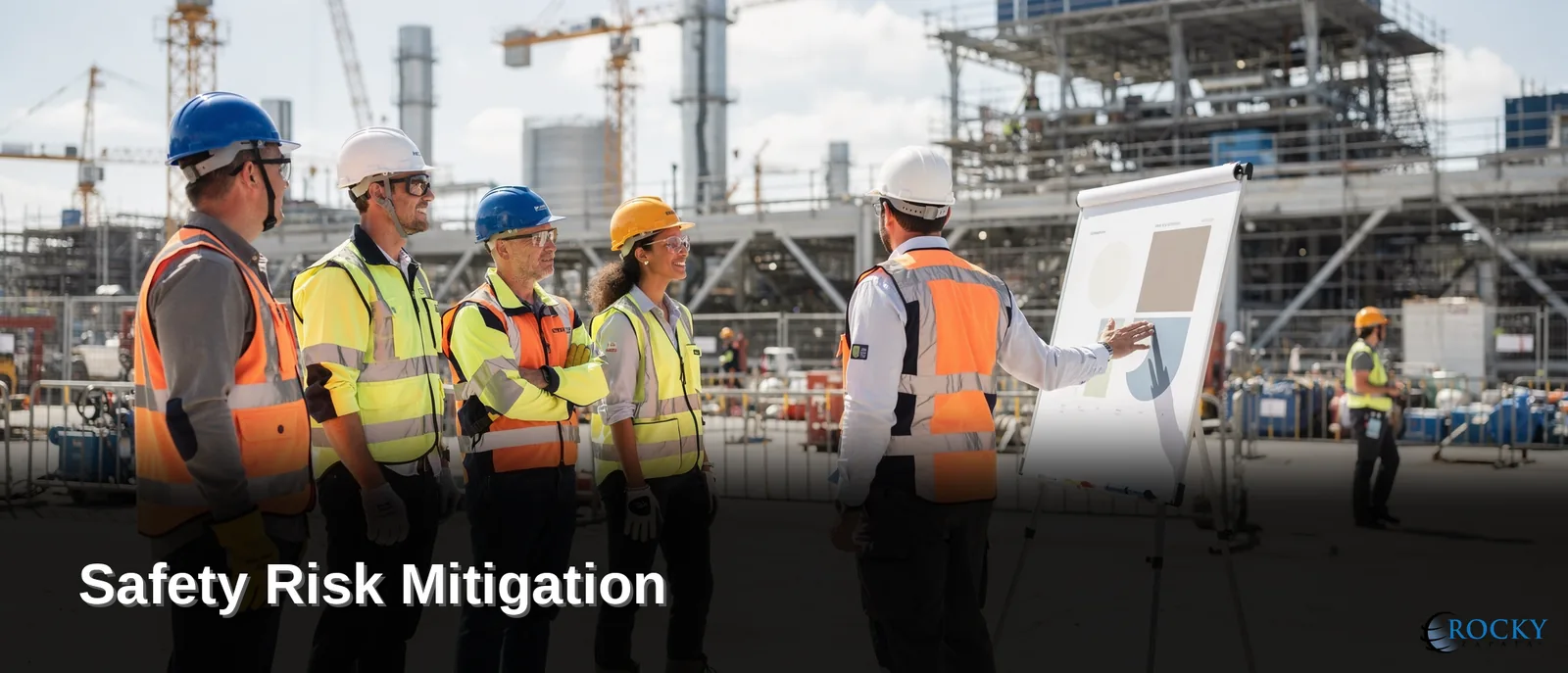
Advanced Safety Risk Mitigation combines job hazard analysis, OSHA 10-hour and 30-hour outreach training, and site-specific fall protection certification into one proactive control system. We integrate hazard communication protocols and customized construction and manufacturing training to close gaps standard programs miss, cutting incident rates and strengthening compliance across South Florida, West Coast Florida, and Central Florida operations.

Key Takeaways

  • Advanced risk assessment tools significantly enhance construction project safety and workforce protection outcomes.
  • Rocky Zapata Safety Consulting's 17-person team delivers specialized risk mitigation strategies in Doral, Florida.
  • Effective risk management strategies reduce business risks across startup, execution, and growth decision phases.
  • Compliance-focused safety practices protect organizations from regulatory violations and operational disruptions throughout projects.

Why Does Workplace Risk Still Cost You?

Unmanaged hazards drain budgets long before an incident ever makes headlines. Delays, insurance hikes, and lost productivity accumulate quietly, and by the time leadership notices, the damage is already booked. We see this pattern across construction sites, manufacturing floors, and healthcare facilities alike: risk left unaddressed compounds.

The broader business climate is not making this easier. Enterprise risk volatility continues to climb, with the large majority of risk decision-makers reporting conditions that are either worsening or holding at already-elevated levels, alongside a rising count of critical risk events year over year. In a landscape like this, structured safety risk mitigation stops being a nice-to-have and becomes a core operational requirement for any organization serious about protecting its workforce and its bottom line.

What's the first step to reduce workplace risk?

We start every engagement with a full workplace assessment. This means identifying specific hazards, mapping regulatory requirements, and understanding operational needs before recommending a single control measure. Skipping this step is how companies end up with generic programs that miss the risks unique to their site.

Do inspections actually lower risk exposure?
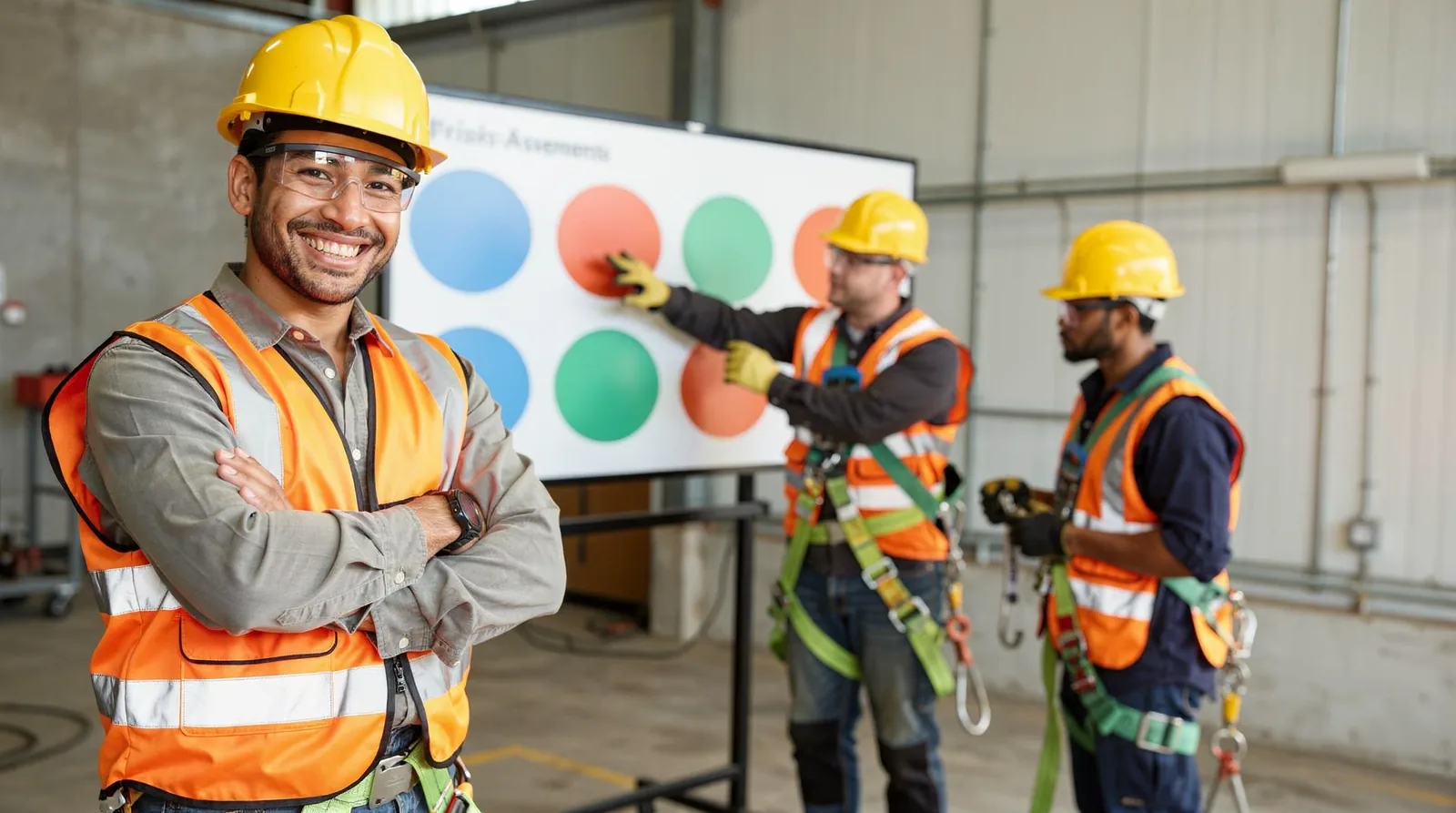
Yes — inspections and audits remain foundational to any serious risk program. In complex work environments, routine inspections catch emerging hazards early and keep operations aligned with regulatory expectations. Without them, even well-designed hazard mitigation strategies lose effectiveness over time. Conditions on the ground shift faster than paperwork does.

Our approach ties assessment, inspection, and corrective action together into one continuous cycle — not a one-time checklist. That cycle is what actually helps organizations reduce workplace risk and avoid the slow financial bleed that unmanaged hazards create.

What Counts As Safety Risk Mitigation Today?

Safety risk mitigation today means the structured process of identifying, assessing, and reducing potential threats to operations, assets, and workforce objectives. Modern programs move well past a hazard checklist; they actively lower both the likelihood and severity of adverse events before they occur. At Rocky Zapata Safety Consulting, we treat this distinction as the foundation of every engagement we build with construction and healthcare clients.

Spotting a hazard is only step one. True hazard mitigation strategies require action: redesigning a process, retraining a crew, or replacing equipment that creates unnecessary exposure. We define effective mitigation by outcomes, not paperwork.

How does mitigation differ from a basic hazard assessment?

A hazard assessment inventories what could go wrong. Mitigation goes further by installing controls that reduce the odds of injury and shrink the damage when incidents happen anyway. We view assessment as diagnosis and mitigation as treatment — both matter, but only one changes outcomes on the jobsite.

Choosing a partner to guide this work carries real stakes. Organizations must maintain OSHA compliance while protecting their workforce, and the wrong consultant leaves both goals exposed. Building a program that works also means navigating a complex regulatory environment while aligning safety strategy with day-to-day operational needs. A balance many internal teams struggle to strike alone.

We ground every recommendation in three pillars:

  • Identification — mapping hazards specific to the trade, site, and crew
  • Assessment — ranking exposure by likelihood and consequence
  • Reduction — implementing controls that reduce workplace risk measurably, not just on paper

Consistent brand identification across our training materials, signage, and documentation reinforces accountability on every site we serve, helping crews recognize and trust the standards we set. That consistency, paired with disciplined execution, separates modern safety risk mitigation from box-checking compliance work.

How Do Expert Audits Uncover Hidden Hazards?

Expert job site audits work because they combine structured evaluation with a trained eye for what routine walkthroughs miss. Our workplace safety inspections cover audit methods, hazard identification practices, and the role each plays in day-to-day safety management across active job sites. Skipping this depth costs companies more than fines—it costs momentum, morale, and sometimes lives.

We treat every audit as a comprehensive evaluation, not a checklist exercise. The process assesses compliance with established safety standards while actively searching for conditions that could cause injury before they do. This is where safety risk mitigation becomes tangible rather than theoretical—turning abstract policy into observable, correctable conditions on the ground.

Expertise shows up in pattern recognition. Our consultants know where hazards cluster—scaffolding connections, electrical panels, confined spaces—and inspect those zones with the scrutiny a general walkthrough skips. Consistency matters too: recurring audits catch drift, the slow erosion of protocols that happens when crews get comfortable.

We rely on a few core mechanisms during every engagement:

  • Document review to confirm training records and permits align with current work
  • Physical walkthroughs targeting high-risk zones and equipment
  • Worker interviews that surface unreported near-misses
  • Corrective action tracking to verify fixes actually happen

Why does audit frequency matter for accident prevention?

Consistent audits are critical for minimizing workplace accidents. Confirming that safety protocols are actually being followed, not just written down. One-time inspections create a false sense of security; repeated audits build accountability into daily operations. Consistent brand identification across our reports, signage, and training materials reinforces that safety is a standing organizational priority, not a seasonal initiative.

Proactive audit measures do double duty: they resolve existing issues while helping reduce workplace risk long-term. Over time, this approach cultivates a genuine safety culture rather than a compliance obligation—and that shift is where lasting hazard mitigation strategies take root.

Which Hazard Mitigation Strategies Actually Reduce Risk?

Strategies that combine systematic inspection with disciplined project oversight deliver the strongest results. We build our approach to safety risk mitigation around two pillars: catching hazards before they cause harm, and managing the countless variables that construction work introduces daily. Neither pillar works alone.

Inspection and audit programs form our first line of defense. When we walk a jobsite and document findings, those findings become more than paperwork. They translate into actionable insight that drives measurable reduce workplace risk outcomes. A genuinely safer working environment for every crew member on site.

Construction projects carry inherent volatility. Timelines shift. Budgets tighten. Site conditions change overnight. Numerous variables and uncertainties converge on every project. Any one of them can disrupt schedules, blow through budgets, or put workers in harm's way. That's precisely why disciplined risk management is not a nice-to-have in this industry. It's central to protecting both people and project outcomes.

What does effective risk management actually accomplish on a construction site?

Effective risk management identifies threats before they escalate, assesses their severity, and mitigates them through targeted action. Done well, this process keeps projects on schedule and within budget without sacrificing quality or worker safety. That's the outcome every safety director should demand from a mitigation program.

Our hazard mitigation strategies typically include:

  • Scheduled and unscheduled site inspections with documented findings
  • Root-cause analysis of near-misses and incidents, not just injuries
  • Pre-task hazard assessments tied to specific work activities
  • Corrective-action tracking with defined ownership and deadlines
  • Ongoing supervisor coaching to reinforce safe behaviors in the field

Each element feeds the next. Inspection data informs training priorities. Training reduces incident frequency. Fewer incidents mean fewer disruptions to timeline and budget — the exact outcome effective risk management is designed to protect.

How Does OSHA Training Strengthen Risk Controls?

Structured OSHA instruction closes the gap between written safety policy and daily field practice. Untrained crews misjudge fall hazards, mishandle chemicals, and misread electrical risks — mistakes that turn into lost-time injuries and citations. Our approach treats training as the foundation of safety risk mitigation, not a compliance checkbox to file away.

We build our programs around OSHA 10-hour and 30-hour outreach courses for construction. General industry, paired with hazard communication and fall protection instruction. These courses give supervisors and crews a shared vocabulary for identifying hazards before they cause harm. Generic certification alone rarely fits every jobsite, though, which is why customization matters.

Why does customized training matter more than generic courses?

Generic courses cover broad regulatory requirements but miss the hazards unique to a given facility. We design training around the specific conditions crews face daily, closing gaps that standardized material leaves open. A warehouse with forklift traffic needs different emphasis than a high-rise construction site, and our programs reflect that distinction.

Delivery location matters just as much as content. We conduct training and consulting on-site, at the facility where the hazards actually exist, rather than in a classroom disconnected from real conditions. This keeps every lesson tied to the equipment, layout, and workflow crews encounter each shift, reinforcing practical hazard mitigation strategies instead of abstract theory.

None of this happens without qualified people behind it. Rocky Zapata Safety Consulting has 17 employees. That team supports the development and delivery of our training. Mitigation programs, giving clients access to consistent expertise across every engagement. That staffing depth allows us to scale customized instruction across multiple sites without diluting quality. A critical factor for organizations working to reduce workplace risk across distributed operations.

What Role Does Construction Site Management Play?

Construction site management sets the operational foundation for every layer of jobsite safety. Coordinated scheduling, hazard tracking, and crew communication determine whether a mitigation plan actually functions on the ground or stays trapped on paper. Weak site management undermines even well-designed safety risk mitigation programs, leaving supervisors reacting to incidents instead of preventing them.

We build our approach around one core principle: no two sites operate under identical conditions. Regulatory and operational demands shift from region to region. We tailor site management strategies rather than apply a single fixed template across every project. This localized approach helps supervisors reduce workplace risk in ways that match the specific conditions their crews face daily.

How does regional coverage strengthen site safety?

Our team serves businesses across South Florida, West Coast Florida, and Central Florida, giving us direct visibility into varied job site conditions. That geographic reach lets us apply consistent on-site risk control across multiple locations at once, rather than treating each project as an isolated case.

What tools support stronger construction site oversight?

Advanced risk management tools, paired with structured best practices, significantly improve project safety outcomes when integrated into daily site operations. We layer these tools into our broader hazard mitigation strategies, connecting real-time oversight with documented compliance procedures.

Effective site management also depends on accurate scoping. Leadership gains a clearer picture of risk exposure when we account for:

  • Project scope and complexity
  • Applicable compliance requirements
  • Relevant industry benchmarks

Together, these factors shape a management structure built for accountability, not guesswork. Supervisors who understand site-specific risk exposure make faster, better-informed decisions when conditions change mid-project.

How Do You Customize Programs By Industry?

Industry customization starts with a comprehensive workplace assessment, not a generic template. We map hazards, regulatory obligations, and operational demands unique to each site before writing a single policy page. Construction sites face different exposure risks than healthcare facilities, and treating them identically wastes budget while leaving genuine gaps unaddressed.

Our approach to safety risk mitigation rests on understanding what individual organizations actually need. Costs and service scope vary considerably across industries, and navigating those pricing strategies and options requires guidance from consultants who work across multiple sectors daily. A construction firm managing fall hazards and heavy equipment needs a different investment structure than a hospital managing bloodborne pathogen exposure or patient-handling injuries.

What Does Assessment-Based Customization Look Like?

Assessment comes first, always. We evaluate physical hazards, review applicable OSHA standards for that specific industry, and study how daily operations create risk exposure. This groundwork shapes every training module and policy that follows.

Why Does Industry Knowledge Matter For Hazard Mitigation Strategies?

Effective hazard mitigation strategies depend on specific, targeted actions that reduce the likelihood or impact of identified risks to acceptable levels. Generic advice cannot address the equipment risks of a construction crew or the infection-control priorities of a healthcare team. Consultants who understand a company's crucial services and components directly strengthen that organization's operational integrity.

Customization typically addresses:

  • Construction: fall protection, equipment operation, site-specific hazard communication
  • Healthcare: bloodborne pathogen protocols, ergonomic injury prevention, patient-handling procedures
  • Manufacturing: machine guarding, lockout/tagout, chemical exposure controls

Every program we build carries consistent brand identification. Leadership teams recognize the same rigorous standard across every location and every industry we serve. That consistency, paired with sector-specific detail, is what allows organizations to reduce workplace risk without sacrificing operational efficiency.

What Should Leadership Do Next?

Leadership moves forward by pairing sound budgeting with the right consulting partner. Skipping either step forces organizations to guess at scope instead of building a defensible, well-funded plan for safety risk mitigation. Two decisions carry the most weight: understanding what drives consulting costs, and selecting a firm equipped to execute the work.

How do we budget for safety consulting?

Pricing decisions hinge on several factors specific to each organization's risk profile, and recognizing those factors helps leadership invest with intention rather than guesswork. A clear grasp of the elements that shape consulting costs supports informed financial planning for ongoing mitigation work, rather than reactive spending after an incident occurs. We encourage operational leadership to treat this cost analysis as a planning exercise, not an afterthought tacked onto a project budget.

How do we choose the right safety partner?

Selecting a consulting firm requires working through a defined set of considerations: services offered, qualifications held, and the questions a prospective client should ask before signing on. These factors give leadership a structured path to a confident, well-informed final decision instead of a rushed one driven by deadline pressure.

Rocky Zapata Safety Consulting, headquartered in Doral, Florida, brings the regional expertise leadership teams need when formalizing a mitigation plan. Our proximity to Florida's construction and industrial sectors means we understand the compliance pressures. Site conditions our clients face daily.

Leadership teams ready to act should:

  • Review current safety spending against known cost drivers before the next budget cycle.
  • Compare consulting firms against a defined set of qualifications and service offerings.
  • Schedule a consultation to align hazard mitigation strategies with organizational goals.

Consistent brand identification across every engagement, proposal, and training document gives leadership one dependable point of contact as programs scale. That continuity, paired with disciplined budgeting, is what allows organizations to reduce workplace risk year over year rather than react to it after losses occur.

FAQ

What is the first step in reducing workplace risk?

Rocky Zapata Safety Consulting starts every engagement with a full workplace assessment, identifying specific hazards, mapping regulatory requirements, and understanding operational needs before recommending controls.

Do inspections really lower risk exposure?

Yes, routine inspections and audits catch emerging hazards early and keep operations aligned with regulatory expectations, forming a foundational part of any serious risk program.

What does advanced safety risk mitigation actually include?

It combines job hazard analysis, OSHA 10-hour and 30-hour outreach training, site-specific fall protection certification, and hazard communication protocols into one proactive control system.

Facts

  • Rocky Zapata Safety Consulting is located in Doral, Florida, US.
  • Rocky Zapata Safety Consulting has 17 employees.

Conclusion

In closing, advanced safety risk mitigation techniques represent a strategic investment in your organization's long-term profitability and operational resilience. By implementing comprehensive assessment protocols, targeted compliance frameworks, and evidence-based safety programs, your business reduces losses while fostering a culture of accountability and excellence. Rocky Zapata Safety Consulting stands ready to guide your organization through this transformative journey, ensuring sustainable growth and measurable safety outcomes that strengthen your competitive position.