


Key Takeaways
- Emergency response quick cards deliver pocket-sized, vehicle-specific instructions for fire, submersion, fluid leakage, towing, and storage.
- A full set of field team emergency cards covers actions for fire, medical emergencies, severe weather, and evacuation procedures, with each individual card limited to a single incident type.
- Evacuation quick references include primary and secondary exit routes, assembly points, accountability check-in, and incident reporting chains.
- Cards use numbered, imperative steps with bold headers, strong verbs, and white space to prevent visual clutter.
What is an emergency response quick card?
What information does a field team emergency card typically include?
How do we use an incident quick response card during an evacuation?

Why do field teams need an evacuation quick reference?
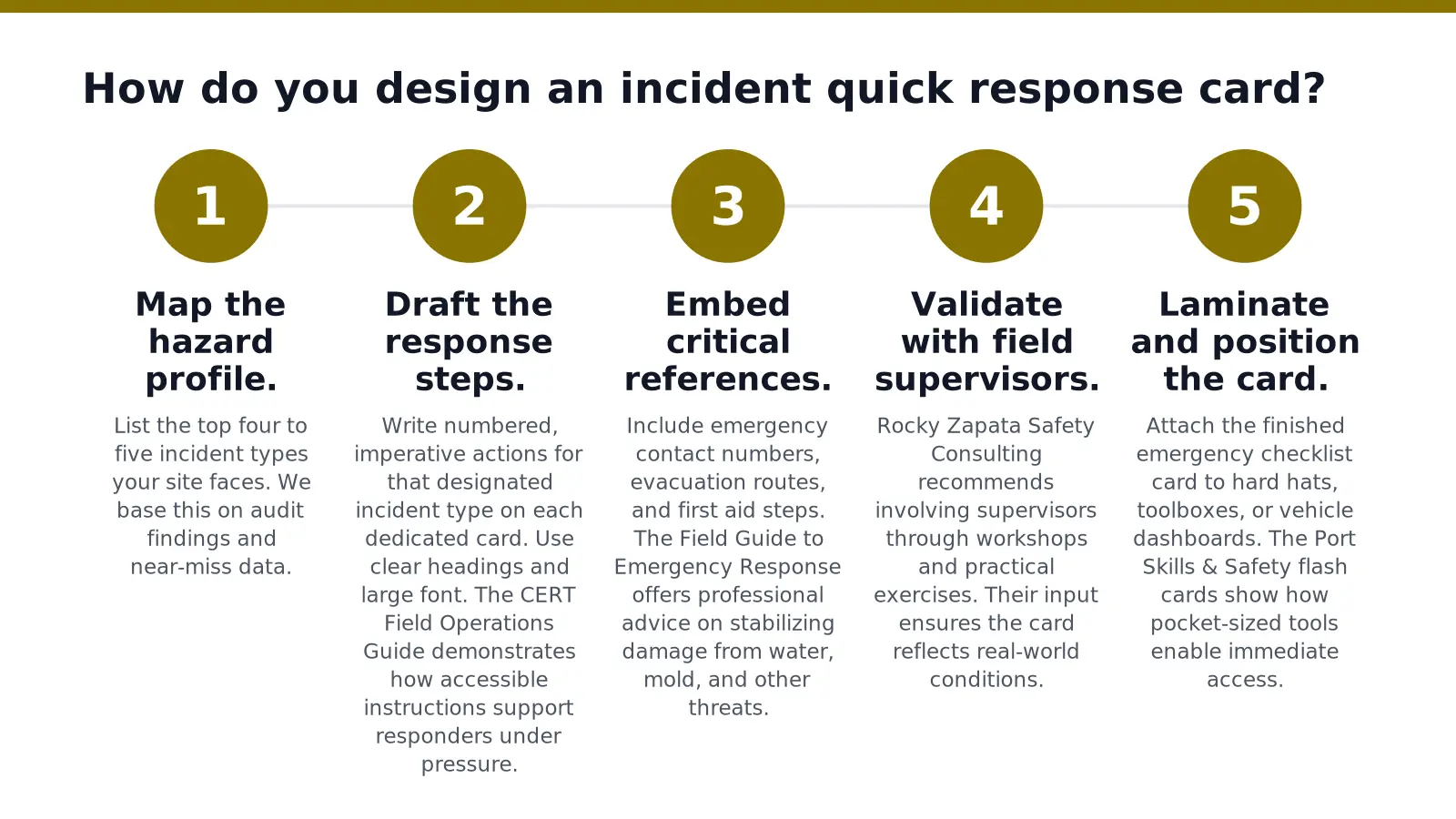
How do you design an incident quick response card?
What information belongs on an incident quick response card?
- Map the hazard profile. List the top four to five incident types your site faces. We base this on audit findings and near-miss data.
- Draft the response steps. Write numbered, imperative actions for that designated incident type on each dedicated card. Use clear headings and large font. The CERT Field Operations Guide demonstrates how accessible instructions support responders under pressure.
- Embed critical references. Include emergency contact numbers, evacuation routes, and first aid steps. The Field Guide to Emergency Response offers professional advice on stabilizing damage from water, mold, and other threats.
- Validate with field supervisors. Rocky Zapata Safety Consulting recommends involving supervisors through workshops and practical exercises. Their input ensures the card reflects real-world conditions.
- Laminate and position the card. Attach the finished emergency checklist card to hard hats, toolboxes, or vehicle dashboards. The Port Skills & Safety flash cards show how pocket-sized tools enable immediate access.
How do you format an evacuation quick reference for high-stress use?
What steps ensure your emergency checklist card works?
1. Conduct a site-specific hazard assessment
2. Draft the card with frontline input
3. Test the card through drills and tabletop exercises
4. Print on durable material and distribute widely
5. Review and update quarterly
How often should we update an emergency checklist card?
Who should test the card before distribution?
How do you avoid common mistakes with quick cards?
- Cut content to critical actions only. Keep one emergency type per card and strip everything else.
- Replace jargon and acronyms with plain language. A field team emergency card must read clearly when adrenaline is high. The Field Guide to Emergency Response stresses clear, practical advice for initial response steps.
- Write site-specific content. We advise against generic cards. Rocky Zapata Safety Consulting builds tailored programs because site-specific hazards drive effective response.
- Train the crew on every card. A card works only if workers know where it lives and how to read it fast.