
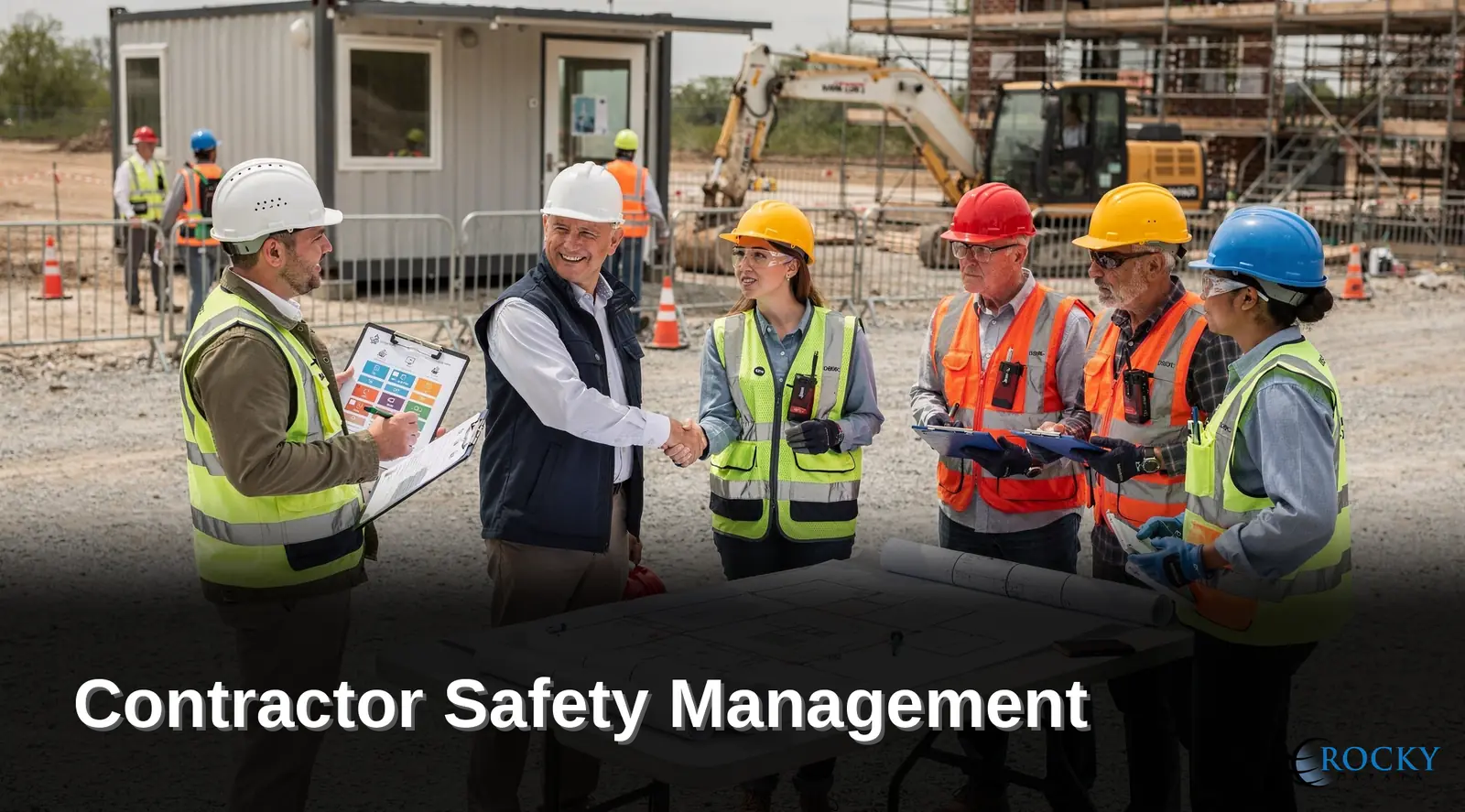
Contractor safety management best practices require pre-qualification screening, written safety terms in every contract, and documented onsite oversight. OSHA's multi-employer worksite policy holds controlling employers responsible for contractor injuries. We build programs combining OSHA 10-hour and 30-hour outreach training, hazard communication, and fall protection certification, giving general contractors and EHS directors a defensible, site-ready compliance structure across every subcontractor relationship.

Key Takeaways

  • Controlling employers retain liability for contractor injuries under OSHA's multi-employer worksite policy regardless of fault.
  • Effective contractor safety programs minimize on-site injuries through hazard identification and prevention practice communication.
  • Rocky Zapata Safety Consulting's 17-person team delivers specialized contractor safety management solutions in Doral, Florida.
  • Preventable contractor incidents remain common despite existing safety rules at most construction worksites.

What Will This Contractor Safety Guide Help You Achieve?

This guide equips construction executives and safety managers with a repeatable framework for contractor safety management, the systematic process of planning, selecting, onboarding, supervising, and reviewing external workers so projects finish safely and on schedule. Unaddressed gaps in that process expose general contractors to OSHA citations, project delays, and liability that follows the controlling employer long after the incident report closes. We built this resource to close those gaps before they reach your jobsite.

Our approach centers on three outcomes: stronger vendor selection, tighter daily oversight, and documentation that holds up under regulatory scrutiny. Readers will leave with a clear method to prequalify contractors before bid award, along with practical controls to manage subcontractor safety once work begins. We designed each section around decisions safety leaders actually make, not theoretical policy.

Why does choosing the right safety partner matter so much?

Selecting a safety consulting firm carries real weight because the decision shapes OSHA compliance. Workplace safety outcomes for every crew on-site. A firm without regional regulatory fluency leaves blind spots in your program. We operate from Doral, Florida, which keeps our team grounded in the compliance realities contractors face across the state.

Who supports these engagements?

A 17-person team backs our contractor safety consulting work, bringing coordinated expertise to each client relationship rather than a single generalist. This structure lets us support:

  • Pre-bid contractor screening and qualification review
  • On-site supervision protocols for active subcontractor crews
  • Post-project safety performance evaluation

Executives who apply this framework consistently reduce the coordination gaps that lead to preventable incidents and costly compliance failures.

Three construction workers wearing hard hats and safety vests discuss safety protocols with a consultant

How Do You Prequalify Contractors Before Hiring Them?

Screening comes first, always, before any contractor submits a bid. Our approach to contractor safety management starts with a formal review of every candidate's safety record, because unvetted contractors introduce risk we cannot control once work begins. Skipping this step costs project owners far more than the time it takes to run a proper check.

We check EMR (Experience Modification Rate) and TRIR (Total Recordable Incident Rate) scores for every contractor before allowing them into the bidding pool. These figures tell us how a contractor has historically performed on safety, not how they describe themselves in a proposal. A contractor with a strong safety story but a poor EMR trend is not one we recommend advancing.

What Does a Prequalification Assessment Actually Cover?

Before we help a client set qualification criteria, we conduct a comprehensive assessment of the workplace itself. This means identifying the specific hazards present, the regulatory requirements that apply, and the operational needs unique to that site. Only then do we match contractor capabilities against what the job actually demands.

Why Does Prequalification Affect More Than Just Safety Records?

Because the regulatory environment is complex, and no two contractors approach compliance the same way. Evaluating how well a contractor's safety strategy aligns with organizational needs is just as important as reviewing raw incident data.

Our prequalification framework typically includes:

  1. Verify EMR and TRIR scores against industry benchmarks.
  2. Confirm current OSHA training certifications and licenses.
  3. Review the contractor's written safety program for site-specific hazards.
  4. Assess alignment between contractor practices and our client's compliance requirements.
  5. Document findings before approving bid eligibility.

Understanding these components directly shapes how well a company protects its operational integrity once subcontractors mobilize on site. We help clients manage subcontractor safety from the first qualification check through final project closeout, ensuring every partner meets the standard before work starts.

Construction safety meeting with contractors discussing written safety terms and OSHA compliance requirements, ensuring subcontractor

How Do You Set Safety Terms In Every Contract?

Written safety terms belong in every contractor agreement, finalized before any crew steps on site. Vague expectations create liability gaps; a signed contract with explicit safety obligations closes them. We build contractor safety management into the earliest stages of contract drafting, not as an afterthought bolted on after a bid wins.

Effective contracts specify training deliverables, not general safety intentions. We recommend naming exact requirements: OSHA 10-hour or 30-hour outreach completion, hazard communication training, and fall protection certification, depending on scope of work. Listing these items by name removes ambiguity and gives site supervisors a documented standard to enforce daily.

What Should A Contractor Safety Clause Include?

A strong clause names required certifications, reporting timelines, and the consequences of noncompliance. It should also require contractors to submit proof of completed training before mobilization, not after an incident forces the question.

  1. Define the OSHA training obligations tied to the scope of work.
  2. Require documentation of hazard communication and fall protection certification.
  3. Set a deadline for submitting proof, prior to site access.
  4. Attach penalties or corrective actions for missed requirements.

How Does Budgeting Affect Contract Safety Terms?

Budgeting decisions shape how thoroughly safety terms get negotiated. Consulting costs shift depending on pricing strategies and service options. Organizations weighing contract terms should account for that variability early. We encourage clients to recognize the factors driving those costs before locking in contract language, since understanding pricing structure strengthens negotiating position. Contracts built without this awareness often underfund the very training requirements they demand, leaving both parties exposed when work begins.

How Do You Onboard Contractors And Communicate Hazards?

Onboarding starts with a structured hazard briefing, not a signature on a form. We treat contractor safety management as an active exchange: every subcontractor group must identify the specific hazards and prevention practices it brings onto our clients' worksites before work begins. That exchange sets the tone for how we manage subcontractor safety across the entire project lifecycle.

Paperwork alone never stops an incident. We deliver on-site training and consulting directly at the job location, walking crews through the hazards unique to that environment rather than relying on a generic slideshow. This hands-on approach strengthens onboarding because it puts supervisors and workers in front of the actual conditions they'll face — scaffolding, excavation, electrical panels, confined spaces.

Because we serve businesses across South Florida, West Coast Florida, and Central Florida, our onboarding process stays consistent no matter where a project sits. A general contractor coordinating crews across multiple regions gets the same rigor, the same documentation standards, and the same hazard communication protocol at every site.

What Should a Contractor Onboarding Checklist Include?

A sound checklist confirms that hazard communication happened, not just that paperwork was filed. We recommend the following sequence:

  1. Collect each subcontractor's hazard and prevention documentation before mobilization.
  2. Conduct an on-site walkthrough covering site-specific risks.
  3. Verify understanding through a brief hazard-recognition discussion with crew leads.
  4. Log completion and flag any gaps for follow-up.

Why Does Hazard Communication During Onboarding Matter?

Hazard communication during onboarding cultivates a culture of safety before crews ever pick up a tool. Proactive briefings address existing site risks. Set behavioral expectations early, reducing the likelihood that preventable incidents slip through gaps between contractor teams.

How Do You Manage Subcontractor Safety Day-To-Day?

Daily oversight determines whether a jobsite stays incident-free or becomes a liability case. We build contractor safety management into every shift, not just the pre-bid paperwork. Without a structured approach to daily supervision, gaps appear quickly, and those gaps lead to serious harm, legal exposure, or costly delays.

To manage subcontractor safety effectively, we follow a consistent sequence on every site we support.

  1. Confirm each crew's safety orientation is complete before work begins.
  2. Walk the site each morning to verify PPE, fall protection, and hazard signage are in place.
  3. Document toolbox talks and correct deficiencies before work resumes.
  4. Escalate repeat violations through the general contractor's chain of command.
  5. Close out the shift with a documented inspection log.

This rhythm only works with people on the ground. Our teams provide on-site training and consulting services delivered directly at the jobsite, which reinforces daily controls throughout the project lifecycle rather than treating safety as a one-time event.

Why does location matter for daily subcontractor oversight?

Coverage matters because inconsistent supervision creates blind spots between visits. We maintain a physical presence across South Florida, West Coast Florida, and Central Florida, which supports consistent daily supervision of subcontractor crews rather than sporadic check-ins. That regional footprint lets us respond to emerging hazards the same day they surface.

How much oversight investment should a project budget for?

Budgeting depends on scope, crew count, and site complexity. Recognizing the factors that influence safety program investment helps EHS directors. Site supervisors allocate daily oversight resources appropriately, rather than under-funding supervision during the busiest phases of a build. We walk clients through those variables before finalizing a program.

Consistent brand identification across every site visit, report, and training session gives project owners a single point of accountability for subcontractor safety performance, no matter which regional team is on-site that day.

How Do You Conduct Job Site Safety Audits?

Structured, standards-based inspections built to catch hazards before they cause harm. That is how we approach every job site audit. We treat each visit as a comprehensive evaluation designed to assess compliance with safety standards. Identify potential hazards before they escalate into incidents. Our process supports contractor safety management at every phase of a project, not just during scheduled walkthroughs.

We follow a consistent sequence on every site we visit:

  1. Review prior incident reports, permits, and contractor documentation before arrival.
  2. Walk the site with supervisors to observe active work zones and equipment use.
  3. Cross-check observed conditions against applicable safety standards and site-specific plans.
  4. Document hazards, near-misses, and compliance gaps with photos and written notes.
  5. Deliver findings to leadership with prioritized corrective actions.
  6. Follow up to confirm corrections have been made and sustained.

Daily controls, put in place once work starts, are what actually prevent incidents on site. Audits confirm those controls are functioning as intended, not just written on paper. This is why we build follow-up verification into every engagement rather than treating the audit as a one-time event.

Why Do Job Site Audits Matter for Contractor Oversight?

Audits matter because they are crucial for minimizing workplace accidents. Confirming that safety protocols are effectively implemented across every crew on site. When contractors from different companies work side by side, inconsistent standards create blind spots that only a structured review can catch.

How Often Should We Audit Contractor Work Areas?

Frequency depends on project risk and site conditions. Proactive inspection measures work best when scheduled regularly rather than reactively after an incident. Consistent auditing helps us manage subcontractor safety across multiple crews and trades simultaneously. These proactive measures address current safety issues immediately while also building a lasting culture of safety among workers, reinforcing habits that carry forward long after the audit team leaves.

How Do You Evaluate And Improve Contractor Performance?

Evaluation requires structured review, not a one-time checklist at kickoff. A complete framework for contractor safety management builds evaluation and continuous improvement directly onto the front-end work of defining needs, setting expectations, and establishing communication channels. We treat performance review as an extension of that early groundwork, not a separate afterthought bolted on at project close.

We measure contractor performance through the same lens we use to prequalify contractors before work begins. Consistent brand identification. helps us track a contractor's safety record across every project phase, from bid to closeout, so nothing gets lost between departments or job sites.

What benchmarks should we use to judge contractor safety spending?

Reviewing consulting costs against project scope and compliance requirements gives us a practical benchmark. We ask whether the investment matches the complexity of the work and the regulatory demands attached to it. Pricing strategies and service options vary widely across the industry, and understanding those differences makes it far easier to judge whether a program delivers real value rather than paperwork.

Our review process includes:

  1. Compare contractor safety costs against defined project scope and compliance obligations.
  2. Audit service offerings and qualifications against actual operational needs.
  3. Verify that documentation supports ongoing efforts to manage subcontractor safety across every crew on site.
  4. Reassess vendor qualifications annually, not just at initial approval.

We also revisit a contractor's services and credentials periodically, checking them against operational integrity standards. This keeps performance evaluation active rather than static, and it protects the site long after the initial contract is signed.

What Mistakes Undermine Contractor Safety Programs?

Four recurring errors weaken contractor safety management at construction sites: treating oversight as a one-time checkbox, abandoning ongoing scrutiny, misjudging regulatory complexity, and skipping partner vetting. Each mistake compounds risk long after the paperwork gets signed.

Our firm sees the first error constantly. Executives sign off on a contractor safety policy, file it, and consider the job done. Contractor safety management is not a static requirement; it demands continuous attention as crews rotate, sites change, and hazards evolve. A program frozen in time stops protecting anyone.

Are we still asking the right safety questions?

Safety leaders and project managers must keep returning to one question: are current measures actually protecting contractors on site? Programs that stop interrogating themselves develop blind spots. Those gaps surface during incidents, not inspections, when it's too late to correct course.

Regulatory complexity trips up even experienced teams. Organizations that try to manage subcontractor safety without aligning strategy to their specific operational needs often stumble. Every jurisdiction, trade, and site type carries distinct compliance demands, and generic policies rarely cover them all.

Why does skipping contractor vetting cause problems later?

Rigor matters most before work begins, not after. Firms that fail to prequalify contractors thoroughly expose themselves to compliance failures and site injuries down the line. We recommend building qualification review into every stage:

  1. Verify safety qualifications and training records before bid acceptance.
  2. Confirm regulatory alignment with OSHA and site-specific standards.
  3. Reassess partner performance continuously, not just at contract signing.

Weak vetting at the front end guarantees weak safety outcomes at the back end.

FAQ

What is contractor safety management?

Contractor safety management is the systematic process of planning, selecting, onboarding, supervising, and reviewing external workers so projects finish safely and on schedule. It closes gaps that expose general contractors to OSHA citations, delays, and liability.

Who is responsible for contractor injuries under OSHA's multi-employer worksite policy?

Controlling employers retain liability for contractor injuries under OSHA's multi-employer worksite policy regardless of fault. This makes documented oversight and written safety terms in every contract essential for general contractors.

What does contractor prequalification involve?

Prequalification involves a formal review of every candidate's safety record, including checking the Experience Modification Rate (EMR), before a contractor submits a bid. Unvetted contractors introduce risk that cannot be controlled once work begins.

Facts

  • Rocky Zapata Safety Consulting is located in Doral, Florida, US.
  • Rocky Zapata Safety Consulting has 17 employees.

Conclusion

In closing, contractor safety management represents a strategic investment in your organization's long-term profitability and operational resilience. By implementing comprehensive compliance frameworks, fostering a culture of accountability, and leveraging expert guidance, your business establishes the foundation for sustainable growth and reduced losses. The commitment to safety excellence distinguishes industry leaders and positions your organization for competitive advantage in an increasingly risk-conscious marketplace.