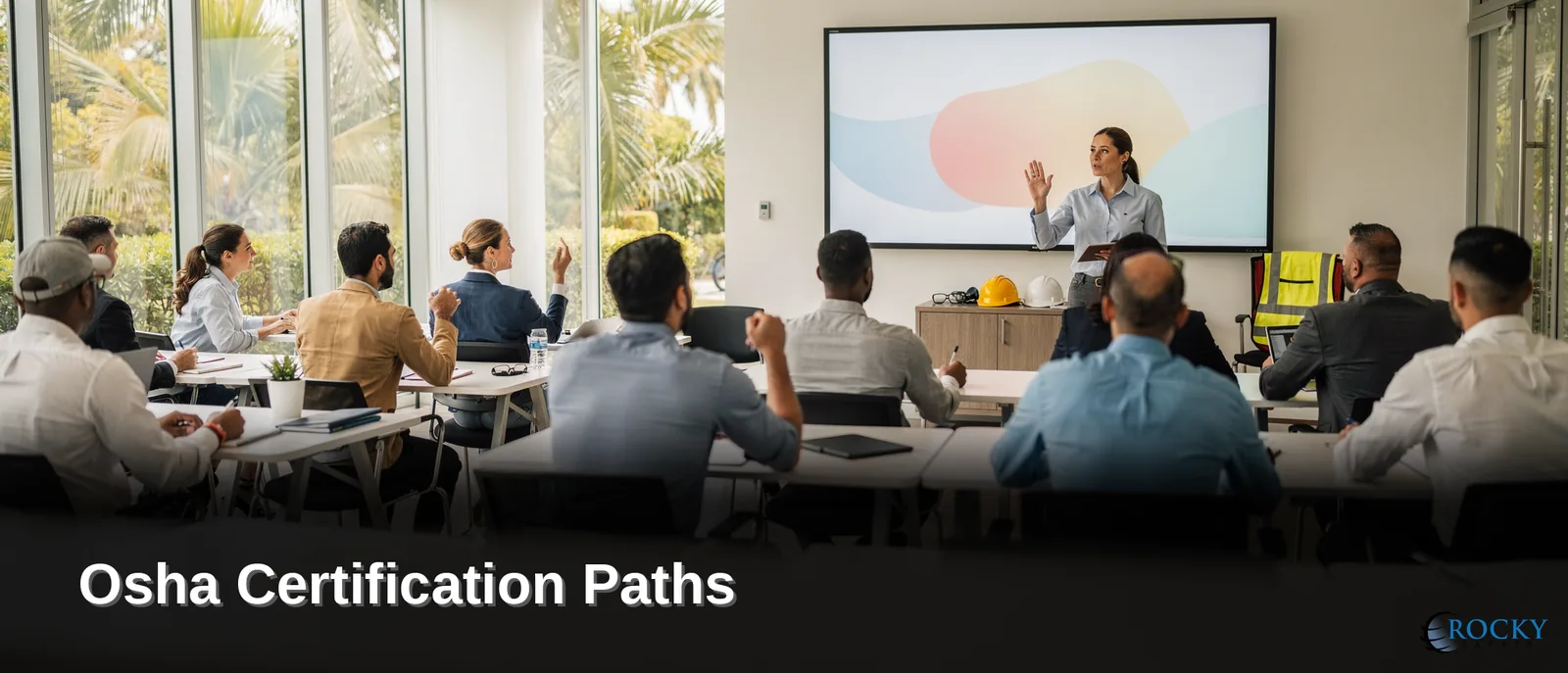
When it comes to osha certification paths, certification pathways include OSHA's 10-hour and 30-hour Outreach Training courses, offered for construction and general industry. We deliver both formats along with hazard communication training, fall protection certification, and customized programs targeting workplace-specific hazards, serving businesses throughout South Florida, West Coast Florida, and Central Florida with compliance-driven curricula.

Key Takeaways

  • OSHA offers 10- and 30-hour construction safety certification programs through authorized Outreach Training providers nationwide.
  • Rocky Zapata Safety Consulting, based in Doral, Florida, delivers OSHA construction safety training to employees and groups.
  • OSHA-authorized online training providers deliver certified courses; OSHA validates only programs from listed vendors, not unauthorized sources.
  • Employers face compliance risks when training documentation lacks proper OSHA certification and executive accountability verification.

Why Does OSHA Certification Matter Right Now?

Workplace injuries and compliance citations cost employers far more than the price of training. Selecting the correct osha certification paths determines whether a company catches hazards before they cause harm or pays for them after the fact. We operate from Doral, Florida, which gives us direct familiarity with South Florida's regulatory environment and the specific enforcement patterns local employers face.

Compliance training forms a foundational part of any effective workplace safety strategy. It is not a box to check once and forget. Employees need current knowledge and practical skills to work safely. To uphold regulatory standards day after day, on every shift and every job site.

What Happens If a Company Skips OSHA Training?

Untrained crews miss hazard warning signs and mishandle equipment, increasing the risk of citations, injuries, and lost productivity. Skipping certified instruction also weakens documentation during inspections, leaving supervisors without proof that workers received required safety education.

How Do I Know Which Safety Consulting Firm to Trust?

The stakes run high when choosing a safety consulting partner, because compliance failures affect workplace safety outcomes directly, not abstractly. Organizations that select the wrong firm risk incomplete training records, gaps in hazard coverage, and continued exposure to preventable incidents.

For safety managers and construction supervisors weighing their options, we recommend evaluating any partner against a short checklist:

  • Demonstrated command of a certified safety training curriculum aligned with current OSHA standards
  • Regional regulatory knowledge specific to the markets a company operates in
  • A track record of consistent brand identification across training materials, credentials, and client communications
  • Willingness to explain, in plain terms, how a program addresses an organization's actual job-site hazards

Firms that meet these standards reduce compliance risk and strengthen a company's long-term safety culture.

What Does the OSHA 10-30 Overview Cover?

Two formats define OSHA outreach training: the 10-hour course and the 30-hour course. Skipping the right format costs employers more than a training fee. It exposes crews to preventable hazards and leaves documentation gaps that surface during an inspection. We built our osha 10 30 overview around this two-tier structure because each course serves a distinct role on a jobsite.

The 10-hour course fits entry-level workers who need a foundation in hazard recognition before stepping onto an active site. The 30-hour course goes further, covering a broader range of safety topics and deeper hazard-recognition skills for supervisors and workers with safety oversight duties. We recommend supervisors and crew leads pursue the 30-hour track, while new hires typically start with the 10-hour course.

What's the difference between OSHA 10 and OSHA 30?

Scope and audience mark the real difference. The 10-hour course delivers essential safety awareness for entry-level employees. The 30-hour course expands into detailed hazard analysis suited to supervisory roles. Both courses share one goal: building employee knowledge of OSHA regulations and personal responsibility for maintaining a safe work environment.

How long does it take to get certified?

Workers who complete OSHA 10 training for Construction or General Industry generally receive their official DOL card within about two weeks of finishing the course. Turnaround supports fast onboarding without sacrificing training quality.

Choosing between these osha certification paths comes down to job function and site risk level:

  • OSHA 10-Hour: Entry-level workers, general hazard awareness, faster completion.
  • OSHA 30-Hour: Supervisors and safety-responsible staff, comprehensive hazard recognition, deeper regulatory grounding.
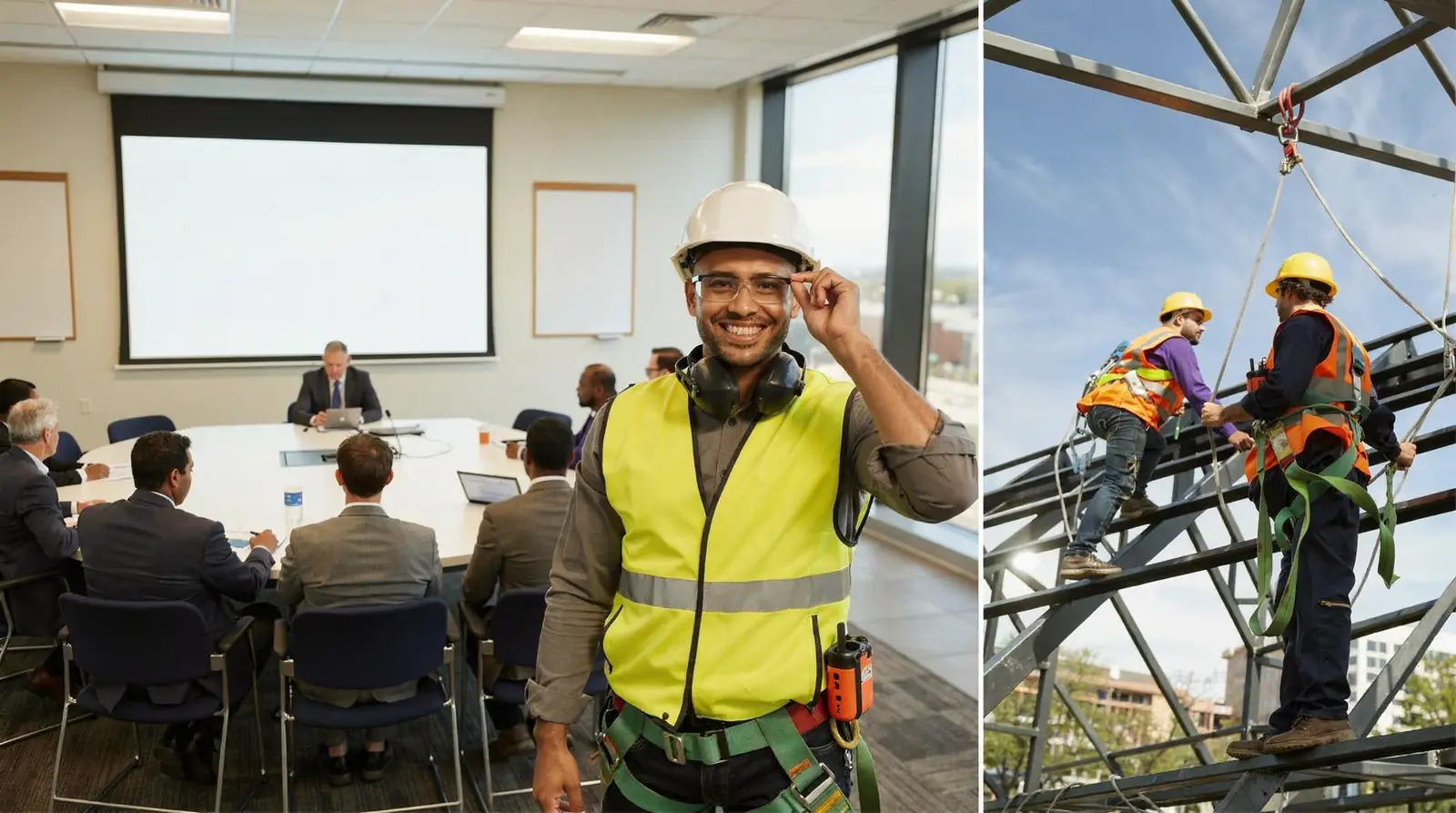
We guide clients through this selection process as part of our certified safety training consulting, matching course level to role and site exposure before a single employee sets foot on the floor.

What Are the Main OSHA Certification Paths?

Four core routes define osha certification paths for most employers: 10-hour and 30-hour Outreach training for construction and general industry, hazard communication training, and fall protection certification. Skipping the right path costs more than a fine. It leaves crews unprepared for hazards that cause real injuries. We treat this selection as a strategic decision, not a checkbox exercise.

A comprehensive program covers workers at every level, from entry-level laborers to site supervisors. Rocky Zapata Safety Consulting builds full-service training around this structure, pairing Outreach courses with hazard-specific certifications so no gap exists between what a worker learns and what a jobsite demands.

What is included in an OSHA 10 30 overview?

An osha 10 30 overview starts with two distinct tracks built for different roles. The 10-hour course fits entry-level workers who need foundational hazard awareness. The 30-hour course serves supervisors and safety personnel who require deeper coverage of regulatory standards. Both tracks exist for construction and general industry. The correct choice depends on the sector and the worker's level of responsibility.

How do we choose the right training provider?

Selecting a path never happens in isolation. We begin with a full assessment of the workplace, identifying specific hazards, regulatory requirements, and operational needs before recommending a course sequence. This groundwork prevents wasted training hours and ensures every certification maps directly to real jobsite risk.

Employers seeking certified safety training also have options beyond direct enrollment. Multiple OSHA-authorized organizations deliver online Outreach training for both the 10-hour and 30-hour Construction tracks, giving employers several vetted paths to compliance. For companies wanting to build internal capacity, an Outreach trainer course exists too — completing it qualifies an individual to conduct both 10-hour and 30-hour Construction classes and issue completion cards directly, reducing long-term dependence on outside vendors.

Who Are OSHA-Authorized Training Providers?

Authorized providers hold official standing on OSHA's published list of organizations approved to deliver Outreach Training. That list does not represent every company selling safety courses. OSHA maintains it specifically so employers. Workers can distinguish vetted programs from unverified ones, encouraging students to research multiple vendors before committing to a training path.

The distinction matters more than most business owners realize. OSHA states plainly that it cannot validate training delivered by vendors outside that authorized list. For a construction supervisor or HR director building a compliant workforce, that means vendor selection is not a preference. It is a compliance necessity. A certificate from an unauthorized source may not satisfy documentation requirements during an inspection.

At Rocky Zapata Safety Consulting, we build every training engagement around consistent brand identification, so clients always know exactly who is delivering their instruction and standing behind the results.

Do OSHA-authorized providers only teach the 10-hour and 30-hour courses?

No. While the standard osha 10 30 overview covers general awareness. Supervisor-level instruction, authorized providers also deliver specialized programs for higher-risk work. HAZWOPER training, for example, protects workers at hazardous sites and covers decontamination procedures and dangerous chemical exposure. These programs extend well beyond entry-level outreach content.

Should our team choose an online provider or on-site instruction?

Both paths appear on OSHA's authorized list, but on-site delivery offers practical advantages for teams managing multiple job locations. We provide on-site training and consulting directly at client facilities, eliminating travel disruptions while still meeting certified safety training standards. Choosing among the available osha certification paths ultimately depends on crew size, site complexity, and scheduling constraints unique to each business.

Why Does Bilingual, Localized Training Matter?

Comprehension drops sharply when workers receive safety instruction in a language they don't fully understand. Miami's multicultural workforce makes language access a frontline safety issue, not a courtesy. We built our programs around this reality rather than treating translation as an afterthought.

Our team delivers certified safety training in both English and Spanish. This dual-language approach ensures every employee, regardless of language proficiency, absorbs critical hazard information rather than guessing at instructions through a language barrier. Miscommunication on a job site costs more than time; it costs safety.

Does language access change training outcomes?

Retention improves when workers hear safety rules in their primary language. A Spanish-speaking crew member who understands lockout/tagout procedures in Spanish acts faster and more accurately during an actual hazard. We treat this as foundational to any osha certification paths strategy, not an optional add-on.

Localization extends beyond language, too. We serve businesses across South Florida, West Coast Florida, and Central Florida, and each region carries its own regulatory rhythm and operational pressures. Our programs adjust accordingly:

  • South Florida — dense multicultural workforces, high construction volume
  • West Coast Florida — coastal industry mix, seasonal labor shifts
  • Central Florida — logistics and manufacturing-heavy operations

Why does regional customization matter for compliance?

A one-size-fits-all training deck fails when regulatory exposure differs by region. We tailor content to the specific hazards and inspection patterns businesses face in each part of Florida. This regional precision, paired with bilingual delivery, forms the backbone of our approach. Consistent brand identification across every session ensures clients recognize the same rigor and reliability wherever we train them.

How Do You Become an OSHA Trainer?

Authorized trainer status requires completion of a dedicated Outreach Trainer course built for professionals who want to teach the 10-hour. 30-hour construction safety programs to their own crews or outside groups. We guide safety managers and construction supervisors through this pathway as part of our broader work in certified safety training, translating federal requirements into practical instruction skills.

The trainer course rests on OSHA Construction Standards as its foundation. Emphasis falls on the topics required within the 10-hour. 30-hour curricula, plus the conditions that generate the highest injury and fatality risk on job sites. This structure matters for anyone comparing osha certification paths. Trainer credentials sit above standard worker certifications and carry added instructional responsibility.

What does the trainer course actually require?

Candidates must prepare and deliver a presentation on an assigned Outreach Training topic. This exercise proves instructional competence, not just subject knowledge, before OSHA extends authorized trainer status. We treat this step as the real test. Supervisors who can explain hazard recognition clearly to a crew prevent far more incidents than those who simply hold a card.

Why does trainer-level knowledge matter for compliance?

Poorly structured training rarely survives scrutiny. Programs need a defensible design that holds up during an actual OSHA inspection, aligned with real job exposure rather than generic checklists. Our approach folds this expectation directly into an osha 10 30 overview for client teams. Trainers walk away able to teach and to document that instruction meets regulatory intent. Consistent brand identification across every training module we deliver ensures clients recognize the same rigor, whether the session covers fall protection, hazard communication, or general industry topics.

How Do You Choose a Training Partner?

Selecting a training partner starts with evaluating a firm's core services, credentials, and track record. Operational integrity depends heavily on this choice: a poorly vetted partner leaves gaps in osha certification paths that surface only during an inspection or after an incident. Rocky Zapata Safety Consulting built its approach around helping construction supervisors, HR directors, and business owners close those gaps before they become liabilities.

Before signing any agreement, we recommend examining three areas: the scope of services offered, the qualifications behind the instruction, and how directly the firm answers specific operational questions. A firm that hedges on curriculum detail or trainer credentials rarely holds up under scrutiny later.

What should we ask before hiring a safety training firm?

Ask about instructor qualifications, completion documentation, and how the firm structures its osha 10 30 overview for your specific workforce. A qualified partner explains how 10-hour and 30-hour outreach content maps to entry-level workers versus supervisors. Vague answers here signal a firm unprepared to defend its training in an audit.

How does pricing factor into the decision?

Cost comparisons mean little without context. Understanding true value requires weighing project scope, compliance requirements, and industry benchmarks against sticker price alone.

We maintain consistent brand identification across every engagement, so clients always know exactly who delivers their certified safety training and stands behind the results. That consistency, paired with transparent qualifications, separates a dependable training partner from a vendor offering little more than a certificate.

What Should Your Team Do Next?

Three actions move a safety program forward this quarter: map current certification gaps, request a program assessment, and schedule training before an inspection forces the issue. Waiting exposes a company to documentation gaps that surface at the worst possible moment — during an actual OSHA review. We built our consulting practice around closing that gap before it becomes a liability.

Our 17-person team of safety professionals supports certification planning, on-site delivery, and program assessment across multiple Florida markets simultaneously. That staffing depth matters for construction supervisors managing crews across several job sites. For HR directors coordinating training calendars across departments. We are not a single-consultant operation stretched thin across every client; we scale to match project complexity.

How do we choose the right certification path for our team?

Choosing among osha certification paths depends on job role, hazard exposure, and supervisory responsibility, not on a generic default. Entry-level field workers typically need different coverage than supervisors managing multiple hazard categories. A compliance-focused training program should offer a full set of options built around a company's actual operations, rather than forcing every employee through identical coursework.

What happens if our training documentation doesn't hold up?

Documentation gaps create direct risk exposure once inspectors start asking questions. Executive accountability comes under scrutiny when records can't demonstrate that certified safety training actually matched the hazards employees faced. Rebuilding that documentation after an inspection is far costlier than building it correctly the first time.

Before finalizing a plan, safety managers should:

  • Audit current certifications against actual job hazards, not job titles alone
  • Confirm whether an osha 10 30 overview fits entry-level staff or whether supervisors need the expanded 30-hour track
  • Request a written assessment identifying gaps by department or job site
  • Set a training calendar tied to renewal deadlines, not to convenience

We provide consistent brand identification across every engagement, so clients working with us in South Florida, West Coast Florida, or Central Florida receive the same standard of documentation, delivery, and follow-up regardless of location or project size.

FAQ

What OSHA certification paths are available for construction safety?

OSHA offers 10-hour and 30-hour Outreach Training courses for construction and general industry. Rocky Zapata Safety Consulting delivers both formats along with hazard communication training, fall protection certification, and customized programs targeting workplace-specific hazards.

Where does Rocky Zapata Safety Consulting provide OSHA training?

Rocky Zapata Safety Consulting, based in Doral, Florida, serves businesses throughout South Florida, West Coast Florida, and Central Florida. The company operates with 17 employees delivering compliance-driven curricula across these regions.

What risks does a company face by skipping certified OSHA training?

Untrained crews miss hazard warning signs and mishandle equipment, increasing citations, injuries, and lost productivity. ## Facts

  • Rocky Zapata Safety Consulting is located in Doral, Florida, US.
  • Rocky Zapata Safety Consulting has 17 employees.

Conclusion

In closing, selecting the appropriate OSHA certification path requires careful alignment with your organizational goals, industry demands, and workforce development strategy. Rocky Zapata Safety Consulting guides organizations through these critical decisions, ensuring your team acquires the credentials and competencies necessary for sustained compliance and operational excellence. By investing in comprehensive OSHA training. Certification, your organization strengthens its safety culture while positioning itself for long-term profitability and reduced workplace incidents.